
Systems | Development | Analytics | API | Testing

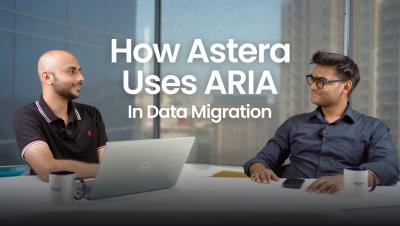
How Astera Uses ARIA: Data Migration

Moving the data is the easy part. Planning is where data migrations go wrong. Sudais (Growth Strategist) sits down with Nabeel Farooqui (Lead Software Engineer), to talk about how Astera uses ARIA on data migration projects, and what changes when you describe the goal to an agent instead of facing a blank canvas. Nabeel has run migrations with and without ARIA. He explains where projects usually go wrong, how ARIA handles the setup in Centerprise, how to validate the pipeline it builds, and the best practices he's learned along the way.
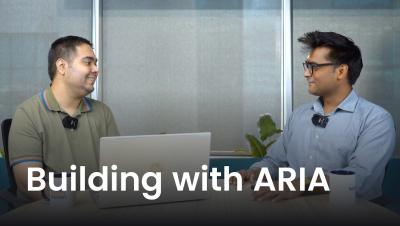
Building With ARIA: From Plain English to EDI Flows

ARIA is an AI Agent that has full knowledge of the Astera ecosystem. Sudais (Growth Strategist) sits down with Hasham Qazi (AI Product Specialist), to talk about why, and how that single agent, ARIA, builds data flows, workflows, and EDI pipelines from plain-language prompts. Hasham walks through a real use case, building an EDI flow from a file you hand to the agent, and explains what ARIA does when your prompt has gaps, how it checks its own work, and where it's heading next.

Accounts Payable Metrics: 10 KPIs to Track, with Formulas and Benchmarks

Accounts payable metrics are the numbers a finance team uses to judge how well AP is working. They show what each invoice costs to process, how fast and accurately it moves to payment, and how well payments are timed. The most useful accounts payable performance metrics fall into five families: cost, productivity, speed, quality, and cash. These metrics apply whether invoices are keyed by hand or captured with accounts payable automation. No single number tells you whether AP is healthy.

Introducing ARIA

What if you could build a data pipeline by just describing it in plain English? Sudais sits down with Maha, Astera's AI evangelist and one of the thought leaders behind ARIA, to talk about Astera's helper agents: what they are, why we built them, and where they're heading. ARIA is a set of specialized agents for Astera products like Centerprise and ReportMiner. Describe what you want, like migrating data from a SQL database to Snowflake, and the agent configures the pipeline for you.

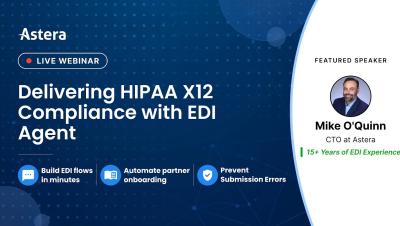
[Webinar] Delivering HIPAA X12 Compliance with EDI Agent

Fixing 834 enrollment files, rejected 837 claims, and HIPAA X12 validation errors can consume hours every week. Every new trading partner or requirement can mean more mapping, validation, testing, and troubleshooting for healthcare EDI teams. Astera EDIConnect helps take that work off your team. Teams can automate workflows that parse and validate HIPAA X12 transactions in a no-code, drag and drop interface. Its built-in EDI Agent helps teams create and adapt flows faster, without relying on custom code or specialized EDI resources.

MCP vs. API: What's the Difference and When to Use Each

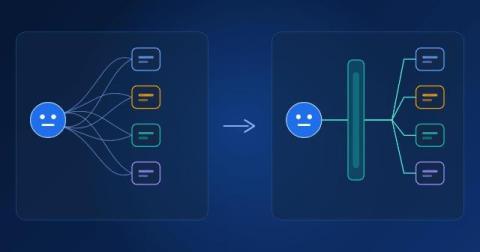
An API is a defined way for one piece of software to request data or actions from another. The Model Context Protocol (MCP) is an open standard that gives AI agents a consistent way to discover and use tools and data sources, so they don't need a custom integration for each one. The short version: MCP doesn't replace APIs. Most MCP servers call APIs behind the scenes. What MCP changes is who the interface is designed for. APIs are designed for developers who read documentation and write code.

Agentic AI Security and Governance: Risks, Controls, and a Practical Checklist

Agentic AI security is the set of controls that keep AI agents from accessing, changing, or sharing more than they should. It covers who an agent acts for, which data and tools it can use, which actions need approval, and how its activity is recorded and reviewed. AI agents are moving from pilots into daily operations. They read invoices, update records, answer customers, and trigger workflows across business systems.

LLM and AI Agent Observability: What to Monitor, Evaluate, and Test

LLM observability is the practice of collecting and analyzing data about how a language model application or AI agent behaves, including prompts, responses, tool calls, cost, speed, and errors, so teams can find problems, measure quality, and improve results. AI agents can now plan tasks, call tools, and work across business systems. That makes them powerful, and it also means a single request can involve many steps that no one sees directly.

Accounts Payable Process: Steps, Exceptions & Controls

Many invoice problems don't start in accounts payable. They start earlier, when someone buys without a purchase order or a delivery goes unrecorded. AP is simply where those gaps become visible, usually as an invoice that can't be paid. That's why it helps to see the accounts payable process end to end. It's how a business receives, checks, approves, pays, and records the bills it owes suppliers, whether those steps run by hand or through accounts payable automation.

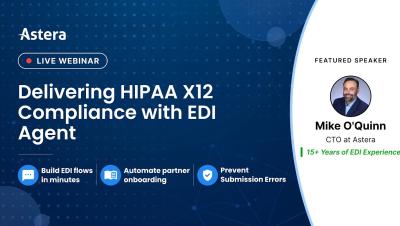
[Webinar] Delivering HIPAA X12 Compliance with EDI Agent

Fixing 834 enrollment files, rejected 837 claims, and HIPAA X12 validation errors can consume hours every week. Every new trading partner or requirement can mean more mapping, validation, testing, and troubleshooting for healthcare EDI teams. Astera EDIConnect helps take that work off your team. Teams can automate workflows that parse and validate HIPAA X12 transactions in a no-code, drag and drop interface. Its built-in EDI Agent helps teams create and adapt flows faster, without relying on custom code or specialized EDI resources.