Systems | Development | Analytics | API | Testing

The Complete Hospital Management Software Implementation Checklist: A Step-by-Step Playbook for Hospital Leaders

The healthcare landscape in 2026 is defined by a paradox. While the global healthcare IT market is projected to skyrocket toward a US$ 961.26 billion valuation by 2030 according to MarketsandMarkets, hospital leaders are finding that the shiny new tool syndrome is a recipe for disaster. McKinsey highlights that while agentic AI and ambient listening are transforming administrative workflows, the foundation, the Hospital Management Software (HMS), remains the most frequent point of failure.
How a Hospital Management System Improves Patient Flow, Billing & Compliance: A Practical Guide

In an era where healthcare margins are tightening and regulatory scrutiny is at an all-time high, hospitals can no longer afford to operate with siloed systems. The traditional disconnect between clinical operations and financial administration creates a black hole where data gets lost, patients wait too long, and revenue evaporates through billing errors. The solution lies in a robust, centralized hospital management system (HMS).

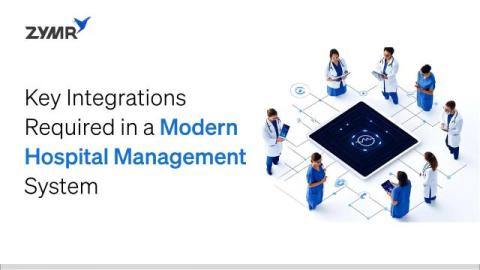
Key Integrations Required in a Modern Hospital Management System: EHR, LIS, RIS, Pharmacy, Billing & Beyond

That gap is exactly where inefficiency begins. A modern hospital management system is no longer just about digitization. It is about connection. Without the connections, hospitals face significant hurdles in patient safety and data integrity. Integration is what transforms a collection of tools into a working healthcare ecosystem. When key integrations in a hospital management system are done right, everything changes. Data flows without friction. Clinicians make faster decisions.

The Complete Guide to Core Banking Modernization: Strategy, Architecture, and Implementation

Core banking is no longer just an operational backbone. It has quietly become the biggest constraint on innovation for many financial institutions. For decades, banks have relied on monolithic, tightly coupled core systems. These systems were designed for stability, not speed. Today, that tradeoff no longer works. Customer expectations have changed. Competition has changed. Regulation has intensified. And most importantly, the pace of digital change has accelerated beyond what legacy cores can handle.

AI-Powered Personalization in Retail Banking: How Banks Can Deliver Hyper-Personalized Experiences at Scale

Retail banking is quietly undergoing one of its biggest shifts in decades. Customers no longer compare banks to other banks. They compare them to Netflix, Amazon, and every digital experience that already gets them. That expectation has changed the game. This is where AI-powered personalization in retail banking comes in. Instead of offering generic products to broad customer segments, banks can now deliver hyper-relevant experiences in real time.

Modernizing Loan Origination Systems for Digital-First Banks: A Strategic Transformation Guide

Lending has always been at the heart of banking. But the way loans originated is going through a quiet but powerful shift. Customers today expect instant decisions. Not in days. Not even in hours. They expect approvals in minutes, sometimes seconds. And they expect this experience to be smooth across mobile apps, web platforms, and embedded finance ecosystems. This is where the cracks in traditional systems start to show. Legacy platforms were never designed for this kind of speed or scale.

Embedded Lending: The Rise of API-Driven Credit Platforms

Credit used to be a destination. You went to a bank, filled out forms, waited days, sometimes weeks, and hoped for approval. That model is quietly disappearing. Today, credit shows up exactly where you need it. While shopping online. While booking logistics. Even while managing business cash flow inside a SaaS dashboard. No redirects. No friction. No traditional loan journey. This shift is what we call Embedded Lending. It is not just a feature.

Transforming Regulatory Reporting with Data Lakes: Architecture, Benefits & Best Practices

Regulatory reporting has quietly become one of the most data-intensive functions in financial services. What used to be periodic, form-based submissions has now evolved into continuous, high volume, multi jurisdiction reporting. And honestly, most legacy systems were never built for this kind of pressure. Banks and fintech firms today are dealing with fragmented data, rising compliance expectations, and shrinking timelines. Resultant - Reporting cycles that are slow, error-prone, and painfully expensive.

Predictive Analytics in Healthcare: Use Cases, Models, Data Requirements & Implementation Playbook (2026)

A hospital might have years of EHR data, ICU records, staffing logs, claims history, and diagnostic reports in different systems. Yet it may still miss signs of patient deterioration before an ICU escalation. This gap is why predictive analytics in healthcare has shifted from experimental AI projects to a key strategy in 2026. Now, healthcare organizations use predictive models to identify sepsis risk earlier.

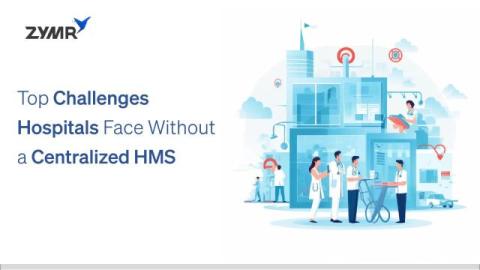
Top Challenges Hospitals Face Without a Centralized HMS - And How to Solve Them (2026)

Most hospitals are digitally enabled, but not digitally connected. Patient information exists across registration systems, EHRs, lab software, pharmacy tools, and billing platforms. Each system captures data, but none owns the full patient journey. Staff move between screens, re-enter information, and rely on manual coordination to keep workflows moving. This is the underlying reality behind the challenges hospitals face without a centralized HMS.

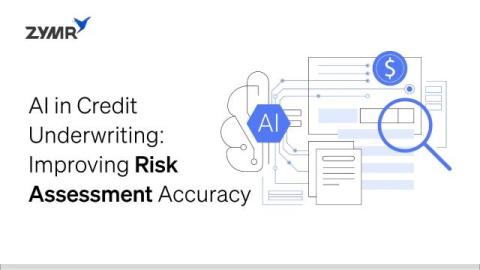
AI in Credit Underwriting: Improving Risk Assessment Accuracy

For years, credit underwriting was pretty straightforward. Lenders looked at a few fixed factors like credit scores and income, to decide who was worthy of a loan. If you didn’t fit the criteria, you were simply rejected. It worked, but only to a point. This approach left out many people who were actually creditworthy and often missed subtle shifts in market stability.

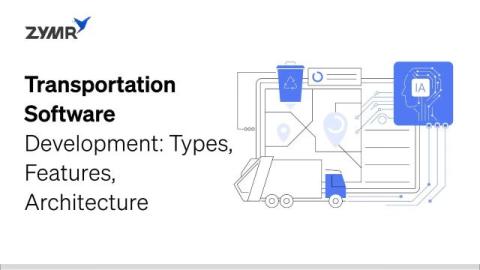
Transportation Software Development: Types, Features, Architecture & How to Build Custom Logistics Solutions (2026)

Logistics isn’t slowing down. But most transportation systems still are. Delays don’t usually come from the truck or the carrier. They come from disconnected systems, manual planning, and decisions made too late. Dispatchers toggle between spreadsheets, ERPs, and carrier portals. Routing decisions depend on outdated data. Visibility breaks the moment a shipment leaves the warehouse. That gap is expensive.

AI in Banking: Use Cases, Architecture & Implementation - The Complete Guide for Financial Institutions (2026)

AI is already embedded in banking systems. The question is whether it’s delivering measurable outcomes or just adding another layer of complexity. Across the industry, investment is not the constraint. Banks spent over $73 billion on AI in 2025, yet most initiatives haven’t translated into production-scale impact. Nearly 95% of generative AI programs remain in pilot mode, and only a small fraction of institutions report clear ROI. The pattern is consistent.

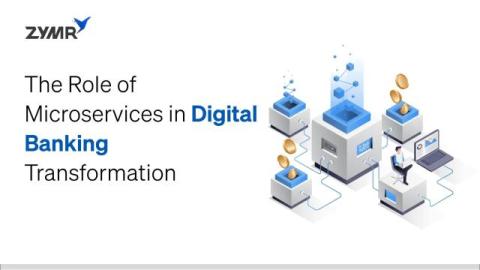
The Role of Microservices in Digital Banking Transformation: Architecture, Migration & Implementation Guide (2026)

A customer opens a banking app at 9:02 AM to check a failed payment. The balance looks wrong. Support says, “It’s a system delay.” The transaction finally reflects several hours later. That’s not a UX problem. It’s an architecture problem. Traditional banks still run on tightly coupled, monolithic systems designed for batch processing, not real-time expectations. But customers today compare banking experiences to Google Pay or Apple Pay, not legacy core systems.

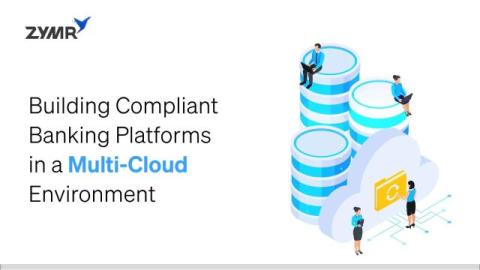
Building Compliant Banking Platforms in a Multi-Cloud Environment: Architecture, Risks & Best Practices

Banks are under pressure. Not just to innovate, but to do it safely. Customers expect seamless digital experiences. Regulators expect absolute control. And somewhere in between, banks are trying to modernize systems that were never designed for this level of speed or scrutiny. This is where Compliant Banking Platforms come into play. Today, financial firms have already embraced hybrid or multi-cloud strategies to balance costs and meet stringent compliance requirements.

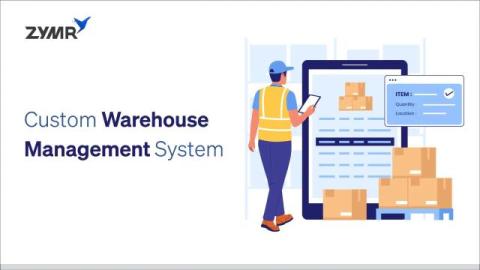
Custom Warehouse Management System: Features, Architecture, Tech Stack & Development Guide (2026)

A warehouse doesn’t fail all at once. It slips. Warehouse operations have changed faster than the systems running them. That gap is showing up in subtle ways. Delays during peak hours, inventory mismatches across channels, and increasing reliance on manual interventions to keep workflows moving. Not failures, but friction. At a market level, the shift is clear.

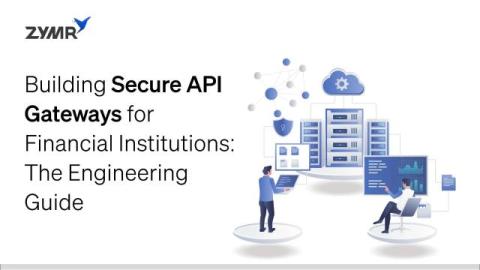
Building Secure API Gateways for Financial Institutions: The Complete Engineering Guide (2026)

APIs now power the core of financial services, from digital banking and payments to partner integrations and AI-driven decision systems. As this dependency grows, the API gateway has evolved beyond routing and traffic management into a critical enforcement layer for security, compliance, and control. Unlike other industries, financial institutions operate under strict regulatory scrutiny while handling highly sensitive data and real-time transactions. This makes API gateways a primary point of risk.

Composable Banking: The New Model for Financial Institutions

For decades, financial institutions have relied on rigid core banking systems. These systems were reliable, yes, but they were never built for today’s digital-first, API-driven world. Every new feature meant long development cycles, heavy dependencies, and costly upgrades. Innovation felt slow. Sometimes painfully slow. Now, things are changing. Composable banking is emerging as a new architectural model that allows banks and fintech companies to build systems like assembling blocks.