Systems | Development | Analytics | API | Testing

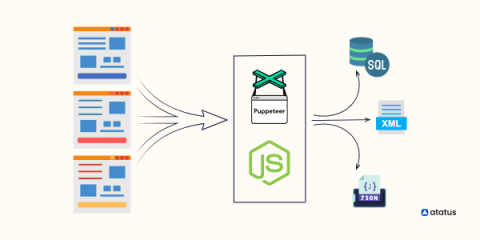
Web Scraping in Node.js using Puppeteer

In this digital era, data plays a vital role in every process. From sales to machine learning, the functionality of every process is data-centric. Various types of data namely text, image, audio, and video are used depending on the process. Collecting these types of data from various resources for a particular process is called data collection. Nowadays data collection is done via the internet manually or programmatically depending upon the process.

Appian 23.1: Design Total Experiences and Unify Processes for End-to-End Process Automation

In today's fast-paced and increasingly unpredictable business environment, it's more important than ever for you to deliver value with fewer resources. Modern enterprise process automation platforms are the key to connecting your people, processes, and data and unlocking operational efficiencies.

Build failure rate: Why and how to find your frequently failing builds? | What, why and how to track

In this article, Co-founder and CTO Viktor Benei, explains why you should care about your build failure rate, and how you can monitor and debug builds that are failing frequently using Bitrise Insights.

Extending Your Selenium Grid With Sauce

Keep your existing Grid, and automatically send overflow/different tests (e.g. Safari) to Sauce Labs! In this continuation, Allen Loew, a Principal Quality Engineer and Sauce Labs advocate, explains how saucectl has transformed his team's test efficiency. Keep your existing Grid, and automatically send overflow/different tests (e.g. Safari) to Sauce Labs! If you’re using Selenium to automate your application’s UI tests, at some point, you’ll need to scale your testing.

DataFinOps: Holding individuals accountable for their own cloud data costs

Most organizations spend at least 37% (sometimes over 50%) more than they need to on their cloud data workloads. A lot of costs are incurred down at the individual job level, and this is usually where there’s the biggest chunk of overspending. Two of the biggest culprits are oversized resources and inefficient code. But for an organization running 10,000s or 100,000s of jobs, finding and fixing bad code or right-sizing resources is shoveling sand against the tide.