Systems | Development | Analytics | API | Testing

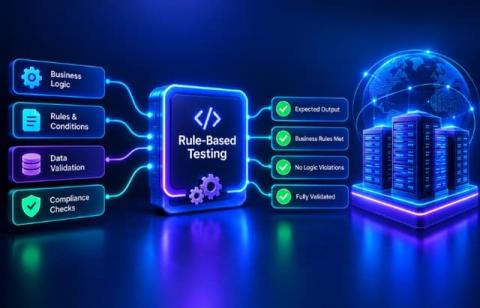
Why Deterministic Rule-Based Testing Unlocks Enterprise Logic Scale

Modern enterprise applications process millions of calculations daily, checking vast combinations of transactional parameters, localized regulations, and internal security architectures. Relying on basic exploratory methods or loosely defined scripts creates severe validation gaps, making structured QA testing and rule-based testing essential for preventing system failure.
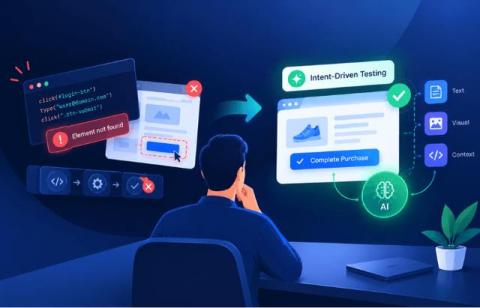

Why Declarative Intent-Driven Testing is the Answer to Broken Automation Pipelines

Every software team knows the pain of the 4:00 PM build failure. The application itself is perfectly fine, but a tiny layout update threw off an automated script, triggering a false alarm across the deployment pipeline. The failure stems not from broken software, but from a brittle script losing its way. By tying validation to volatile implementation details, the QA industry has cornered itself.

AI-Powered Performance Testing: Why Modern Systems Need Intelligent Engineering

Digital platforms move faster than ever today. In complicated systems, engineering teams upload code modifications numerous times a day. These apps are powered by distributed microservices, third-party APIs, and cloud resources. But many teams still validate speed with legacy workflows. Traditional load tests run solely static scripts against pre-planned scenarios. After the developers complete constructing the feature, they model historical traffic.

Usability Testing for Better UX: Fixing Real-World Design Friction

After two decades in quality engineering, you learn that passing test runs can lie. Pipelines turn green, unit suites hit target coverage numbers, and servers return clean HTTP 200 codes. Then the build lands in front of live users, and adoption falls flat. People get stuck on form fields, miss primary actions, and abandon checkouts. The code works, but the product fails. Functional testing proves an engine runs.

Strategic ROI Frameworks for AI-Driven Quality Engineering

Enterprise software organizations allocate most of their total IT budgets to software validation and quality maintenance. According to the Consortium for Information and Software Quality (CISQ), poor software quality drains over $2.41 trillion annually from the US economy in operational failures, technical debt, and unmitigated production incidents.

When AI Tests AI: Breaking the Recursive Trust Loop in Enterprise QA

Enterprise adoption of autonomous agentic workflows has shifted software quality engineering. Deterministic automated testing remains foundational for API behavior, schema validation, authorization, and data integrity. Dynamic, non-deterministic model outputs, however, require additional layers of verification. To manage scale, modern AI application testing increasingly relies on AI test AI workflows using LLM-as-a-judge setups.

How to Build an Effective Database Testing Strategy for Reliable Releases

Green build pipelines lie. Your automated unit suites can execute without a single failure, API contracts can validate cleanly, and browser regression sweeps can pass with pristine checkmarks. Yet the moment a release hits production, software must interact with state. A single unindexed foreign key, an overlooked lock escalation on a high-throughput table, or an uncalibrated default constraint will bring an entire platform to a halt while your CI dashboards remain reassuringly green.

Engineering Reliability: Continuous Pipeline Strategy for AI Model Validation

When an enterprise moves an AI system from a local staging environment to a live production cluster, standard testing metrics often break down. A pipeline that achieves excellent accuracy on static test sets can easily fail when exposed to real-world user data, changing context windows, or minor updates in third-party model APIs. For quality assurance leaders, maintaining software reliability requires moving past manual evaluations and building automated validation pipelines.

Crowdsourced Testing for Mobile Apps: Overcoming the Device and OS Fragmentation Problem

The mobile sector has undergone massive transformations since the early days. What used to be a predictable verification exercise is now an intricate web of competing hardware manufacturers, custom firmware distributions, distinct chipset designs, and fast software update schedules. Modern software teams face hundreds of real-world variables every time they prepare a public build. Managing device fragmentation stands as one of the most demanding technical roadblocks in software verification.

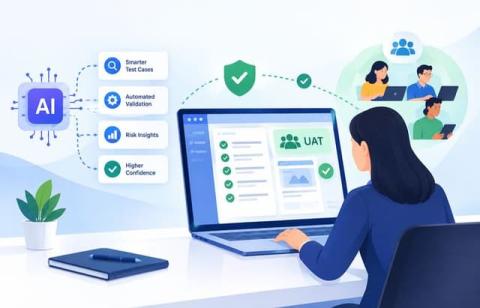
The Smarter Safety Net: Modernizing User Acceptance Testing (UAT) with AI

Every engineering leader knows the scenario: sprint tickets are closed, unit coverage shows green across the board, API pipelines pass without a hitch, and the build is tagged "ready for release." Yet, the moment the software reaches actual business users, reality hits. A multi-tier approval workflow breaks on a regional tax calculation. An enterprise customer encounters friction during a custom bulk checkout.