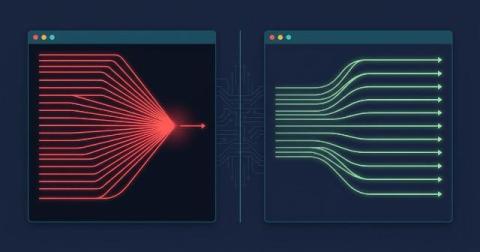
As AI scales and workloads become continuous, traditional architectures fall short — making Open Data Infrastructure a critical priority for data leaders.
It’s hard to keep up with how fast artificial intelligence is transforming organizations’ approach software security. Models like Claude Mythos Preview bring impressive new capabilities to the market, offering dynamic threat detection and adaptive learning. These advancements lead many engineering leaders to ask a critical question: Do we still need static analysis? The short answer is a definitive yes.
Eighty-five percent of business leaders have suffered from decision distress — regretting, feeling guilty about, or questioning a decision they made in the past year, according to Oracle’s Decision Dilemma study of 14,000+ leaders and employees across 17 countries.
New capabilities remove barriers to production-ready AI applications with agent-powered workflows, automated data protection, and private cloud connectivity.
Lending has always been at the heart of banking. But the way loans originated is going through a quiet but powerful shift. Customers today expect instant decisions. Not in days. Not even in hours. They expect approvals in minutes, sometimes seconds. And they expect this experience to be smooth across mobile apps, web platforms, and embedded finance ecosystems. This is where the cracks in traditional systems start to show. Legacy platforms were never designed for this kind of speed or scale.
We are launching with this post a new series of blog articles and LinkedIn posts titled "Features Sitting Idle". In this series, we explore key features of OctoPerf that are either misused, misunderstood, or simply unknown to our users. It's time to shine a light on these hidden gems, features that are already there, ready to become a central part of how you test. This is probably the most common situation after a load test.
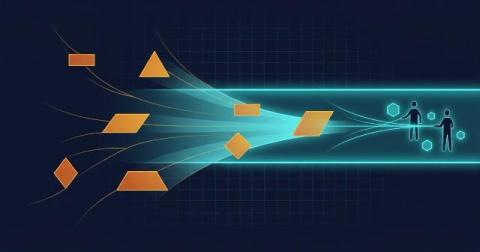
This is Part 2 of the AI Software Factory series. In Part 1, we established that the Agile methodology is buckling under the weight of “elastic code.” When AI agents can generate functionality in seconds, two-week sprints and manual task management become organizational bottlenecks. We introduced the concept of the AI Software Factory: a shift from managing human tasks to managing business intent through a “Funnel of Increasing Trust.” But a factory requires infrastructure.
We’ve been building an AI agent that can take a production bug, find the root cause in captured traffic, write a fix, and validate it before a human reviews it. We call it Agent Factory. Last week we ran it on ourselves, against a real bug in our own production service. The first thing we did was get the workflow wrong.