The AI Value for ISVs and Data Providers: 5 Steps to Create Innovative Data-Driven Solutions

In today’s rapidly evolving tech landscape, it's tempting for businesses to chase after the latest trends—Artificial Intelligence (AI) being the crown jewel of them all. However, unless you're an AI and data analytics provider, focusing solely on AI might be a misstep.


How to Prepare Your SAP Data for AI

Since generative AI exploded onto the global market, organizations have flocked to adopt it. SAP is no exception–late last year, the ERP launched its embedded AI copilot, Joule. In addition, SAP has invested in other AI companies, hired a chief artificial intelligence officer, and added generative AI features to its products. In order to spur cloud adoption, many of SAP’s premium AI features will only be available to RISE with SAP and GROW with SAP customers.

On-Premise to Cloud Migration: Types, Benefits, Best Practices & More

Twelve years ago, a Wakefield Research survey revealed that 1 in 3 Americans thought cloud computing was somehow related to the weather. Fast forward to today, 67% of enterprise infrastructure in the US is cloud-based. Given that 92% of enterprises already have a multi-cloud strategy in place or in the works, it’s evident that embracing cloud migration is no longer just an option but a strategic necessity.

Apna Unlocks AI Job Matching for 50 Million Users With Confluent & Onehouse

Since its beginnings just five years ago, Apna has become the leading jobs site for tens of millions of workers in India, the largest labor market in the world. Today, Apna has more than 50 million registered users, resulting in more than 5 million interviews and 100,000 jobs activated per month.

The Role of Data Governance in Successful Mergers and Acquisitions: Why It Matters

Mergers and acquisitions (M&A) have become a stepping stone to corporate growth strategies. Companies worldwide are actively turning to these deals to expand market reach and drive financial performance. The latest data from EY-Parthenon confirms this trend, with M&A activity projected to surge by 12% in 2024. While the idea of combining companies is undeniably exciting, a critical yet often overlooked factor that can either make or break a deal is data governance.

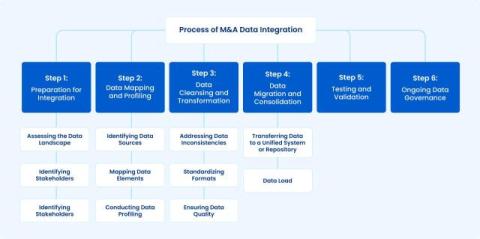
The Guide to Data Integration in Merger and Acquisition

Mergers and acquisitions (M&As) are strategic business activities where two or more companies join forces by combining their assets, operations, and management structures, often resulting in a unified entity or allowing one company to absorb another. These transactions are typically pursued to enhance competitive advantage, expand market share, or achieve operational efficiencies.