Systems | Development | Analytics | API | Testing

Machine Learning Operations (MLOps) Practices in WSO2 Choreo

MLOps also known as Machine Learning Operations is a core function of Machine Learning engineering, focused on streamlining the process of taking machine learning models to production, and then maintaining and monitoring them. MLOps is a collaborative function, often comprising data scientists, devops engineers, and IT. In this video, you can learn about the basics of MLOps and its applications in Choreo.

Types of APIs & Popular REST API Protocol

Application Programming Interfaces (APIs) are everywhere, and with good reason. These bits of software join apps and microservices together despite different programming languages, operating systems, and data formats. An API can integrate services that otherwise can’t communicate with each other. They lay the groundwork for the most successful digital transformation strategies and composable enterprises.

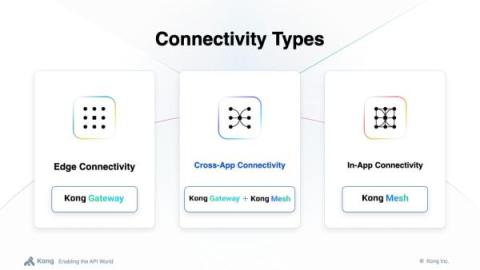
The Future of API Gateways on Kubernetes

The exponential growth of the Internet and cloud computing has given rise to applications that are smaller, more distributed, and designed for highly dynamic environments capable of rapidly scaling up or down as needed. These applications have pushed the demand for modern API management product architectures that can leverage cloud native capabilities to achieve scalability, resilience, agility, and cost efficiency.

Monetizing APIs: Accelerate Growth and Relieve Strain on Your Engineers

APIs have become increasingly popular in the current SaaS ecosystem due to their ability to seamlessly integrate software systems. APIs provide standardized ways for applications to share data. API monetization is a powerful way for businesses to drive growth and generate revenue from existing API consumer data and usage. By offering your APIs as products or services, your company can tap into new markets, attract more developers, and create self-sustaining ecosystems around your product line.

From Excel to API in minutes

Read data from an Excel file and host that data in a REST API in minutes by using a low-code platform. You can create your own application that will retrieve data from any Excel file. Easily write that data to a new file, apply enrichment and transformation, write it to a database or host it directly on a REST API. How to quickly create an API? Or an integration application? Why not give Low-Code platforms a try?

Quickly create a CRUD API using Low-Code

Quickly create a Create, Read, Update Delete API using low-code. How to quickly create robust and flexible CRUD APIs to take care of your BI data loading needs. Linx is a general-purpose, low-code platform for backends. Developers use Linx to build, test, deploy and manage backend solutions such as APIs, integrations and automation.

Simple REST API Creation for Data Distribution

This is a short, real-world example of how a REST API can be created using Linx. The API will allow for data retrieval from a database. You can create endpoints using a wizard. Linx is a general-purpose, low-code platform for backends. Developers use Linx to build, test, deploy and manage backend solutions such as APIs, integrations and automation.

Understanding GraphQL: A Comprehensive Comparison With REST API and Its Implementation in Node.js

Application Programming Interface, or API, development is a critical aspect of modern software engineering, enabling diverse software systems to interact and share data seamlessly. The API serves as a contract between different software applications, outlining how they can communicate with one another. Two of the most popular architectural styles for building Web APIs are Representational State Transfer (REST) and GraphQL.