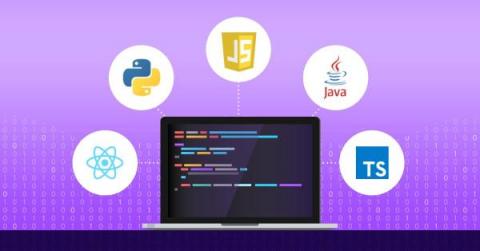
Infrastructure as code is a core component of all modern SRE team’s day-to-day work. There are plenty of options available, but the one that I’m most excited about is Pulumi. Instead of writing a domain-specific language (DSL) to configure your infrastructure, Pulumi lets you write the language you already know. For me, that’s Typescript, but if you prefer Go, Python or DotNet programming languages, that’s an option too.
So many announcements, so many surprises and a seemingly never-ending list of impactful customer stories! After two and a half days packed with fun and learning, we bid farewell to Kong Summit for another year. If you were one of the almost 5,000 people that registered, you know exactly what we are talking about. Here is a recap of some of the most exciting parts of Kong Summit 2021.
We are thrilled to be once again recognized as a Leader in the 2021 Gartner Magic Quadrant for Full Lifecycle API Management. We believe this recognition reinforces our commitment to our customers, who rely on us to continue innovating so they can build solutions that unlock growth, security and innovation for their companies. Kong is the most adopted API gateway, with over 2.6M instances running worldwide.
Kubernetes continues to lead the container orchestration charge. In fact, according to the latest CNCF survey, 83% of respondents said they were using Kubernetes in production. Kubernetes provides you with key features such as self-healing capabilities, automated rollouts and rollbacks, automated scheduling, scaling, and infrastructure abstraction. This provides a truly extensible, highly available and infrastructure-agnostic environment to deploy all your modern microservices-based applications.
If you're a developer working with web hooks, you should definitely check out our new product, Hook Relay.
We’re seeing a massive shift in how companies build their software. More and more, companies are building—or are rapidly transitioning—their applications to a microservice architecture. The monolithic application is giving way to the rise of microservices. With an application segmented into dozens (or hundreds!) of microservices, monitoring and consolidated logging become imperative.