Systems | Development | Analytics | API | Testing

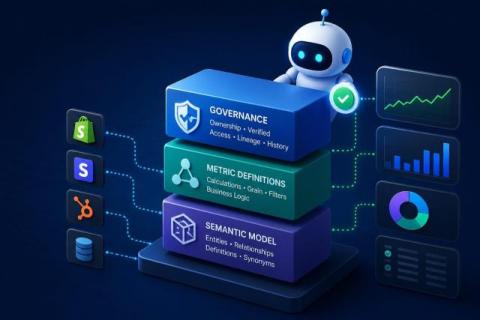
Why AI Agents Need a Semantic Layer (and What That Actually Means in 2026)

Everyone is racing to put an AI agent on top of their data. Almost nobody is asking whether the agent can be trusted to act on what it sees. That is the wrong order. And the way most teams are trying to fix it — bigger context windows, more reasoning, another eval — is also wrong. The generative model stopped being the hard part of agentic analytics months ago. Wiring an LLM to a warehouse is a weekend project.
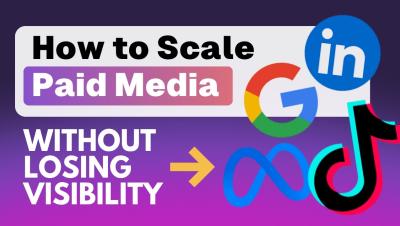
How to Scale Paid Media Across 5 Channels Without Losing Visibility (Google, Meta, LinkedIn, TikTok)

Agencies hit the same wall every time they try to grow: who is going to actually run the campaigns, and how do you keep visibility across every client and every channel when you do? Ashish Chaturvedi, data analyst of Atidiv, walks through how Atidiv and Databox solve both sides of the problem. Atidiv handles campaign execution across Google Ads, Meta, LinkedIn, TikTok, and email. Databox gives you the visibility layer: one interactive view where you can see spend, revenue, and return across every channel without chasing updates in Slack, email, or spreadsheets.

How to Connect Business Data to Claude (and Actually Get Accurate Answers)

You ask Claude what your MRR was last month. The answer comes back fast, formatted cleanly, stated with total confidence, and completely wrong. Not because Claude is broken, but because it was guessing. Claude has no live connection to your business data by default. It cannot query your CRM, pull from your ad platforms, or check your billing system. So when a marketing manager asks about their numbers, Claude either refuses or generates a plausible-sounding figure based on patterns in its training data.

What "AI-Ready Data" Actually Means And How to Tell If Yours Is

You turned on an AI feature in your analytics tool. It surfaced an insight about your pipeline. You looked at it, paused, and closed the tab because you weren’t sure the number was right. AI-ready data would have made you forward it instead. It’s data that is clean, structured, and governed consistently enough that an AI model can reason about your metrics without a human translating or reconciling them first.

How to Prevent AI Hallucinations: 3 Hidden Threats When AI Analyzes Your Data

A VP of Marketing presents an AI-generated performance review on a Monday morning. The CAC numbers are clean. The trend lines are directional. The exec summary recommends a $200K budget reallocation from paid search to organic content. The CFO nods. The budget shift is approved before lunch. Two weeks later, an analyst spot-checks one figure against the source system. The number doesn’t exist anywhere in the connected data.

New: Close The Gaps In Your Reporting Stack With Custom Integrations

Most teams work across dozens of tools, and not all of them connect to their reporting workflows out of the box. There are always sources that fall outside the native integrations list: an internal tool your team built, a platform specific to your industry, or a piece of software that a vendor hasn’t prioritized supporting yet. When that data isn’t directly available, teams get it in however they can.