
Systems | Development | Analytics | API | Testing

Configuring a workflow using the Workflow Editor in Bitrise

In this video, Ben Boral introduces the Bitrise workflow editor, a GUI abstraction layer built on top of the YAML file that defines CI pipelines and workflows. The Workflow Editor makes users more productive, helps avoid errors, and allows for easily defining and maintaining workflows. The workflow editor generates syntactically valid YAML and is available in both online and local versions, providing the benefits of "pipeline as code" with greater ease of use.

Retail App Development Guide 2026

Wondering why your retail business isn't scaling the way you'd hoped? In a world where 76% of consumers say convenience is their top priority, building a smart, user-friendly retail app is essential. The retail landscape is changing faster than ever. Are your customers ghosting you at checkout? Are your in-store efforts falling short despite decent foot traffic? These are signs that traditional methods may no longer be enough.

FastAPI error handling: types, methods, and best practices

Errors and exceptions are inevitable in any software, and FastAPI applications are no exception. Errors can disrupt the normal flow of execution, expose sensitive information, and lead to a poor user experience. Hence, it is important to implement robust error-handling mechanisms in FastAPI applications. In this article, we will discuss the different types of FastAPI errors to help you understand their causes and effects.

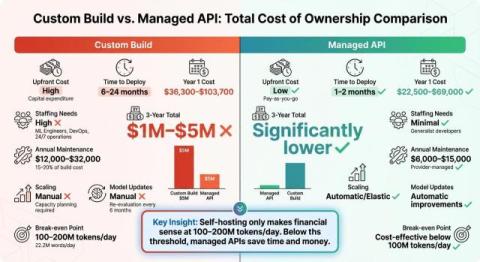
The Hidden Cost of Building Your Own LLM Data Layer

For most businesses, the break-even point for self-hosting only makes sense if processing 100–200 million tokens daily. Otherwise, managed API solutions are more cost-effective, faster to deploy, and easier to maintain. Alternatives like DreamFactory offer pre-built, secure API layers, saving time and money while simplifying enterprise AI integration. Bottom line: Building your own LLM data layer is a major investment with hidden challenges.

Delphix Demo Delphix MCP Server: Tutorial

In this demonstration, Perforce Delphix expert Jatinder Luthra gives an insightful overview of using the Delphix MCP Server. After highlighting data operations’ latest challenges and MCP basics, Luthra takes you on a demo journey following a QA Lead, Sarah, featuring example scenarios and use cases. Find out how you can use the Delphix MCP Server prompts to bolster your organization’s testing, troubleshooting, and cross-team collaboration — watch the demo now.

Introducing Agent-Flavored Markdown (AFM): Natural Language Definitions for Framework-Agnostic AI Agents

Advances in large language models (LLMs) and their widespread accessibility have transformed both what software can do and how we build it. The use of LLMs has quickly evolved from simple single-turn interactions to AI agents that reason, use tools, manage state, and operate autonomously.

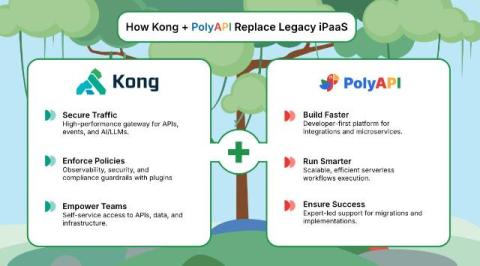
Modernizing Integration & API Management with Kong and PolyAPI

APIs and integrations are the foundation of the modern enterprise. Every organization needs to securely connect systems, move data, and automate workflows, all while maintaining control, visibility, and flexibility. Increasingly, those same APIs are also being consumed by AI-powered applications and agents that must interact safely with underlying business systems.

Secure AI at Scale: Prisma AIRS and Kong AI Gateway Now Integrated

In today's digital landscape, APIs are the backbone of modern applications, and AI is the engine of innovation. As organizations increasingly rely on microservices and AI-powered features, the API gateway has become the critical control point for managing traffic. But as LLM/GenAI and MCP requests flow through these gateways, they bring a new wave of security challenges.