Systems | Development | Analytics | API | Testing

Test Case Management: Tools, Templates & Strategy

Effective test case management transforms scattered testing efforts into a systematic quality assurance powerhouse. Start treating test case management as a strategic investment, not an administrative burden. Poor software quality costs the U.S. economy at least $2.41 trillion annually, according to the Consortium for Information & Software Quality's 2022 report. Yet many QA teams still struggle with scattered test cases, missing documentation, and zero visibility into testing progress.
Sponsored Post

Settle Your QA Debt Before the Bugs Start Breaking Kneecaps

In Part One, we discussed how QA debt builds silently over time - causing slower releases, late-night firefights, and unpredictable test cycles. The next step is understanding how much debt you have and where it hides. This post goes deeper into measuring QA debt - what to track, how to collect data, and how to use those insights to create a sustainable plan for improvement.

Part 3: Building a Production-Grade Traffic Capture and Replay System

At a previous company, we had over 100 microservices. I’d make what seemed like a simple change to one service and deploy it, only to discover it broke something completely unrelated. A change to the user service would break checkout. An update to notifications would break reporting. We spent more time fixing unexpected bugs than shipping features. The problem was our test scenarios were too simple.

Writing Comprehensive Integration Tests for Django Applications

Integration testing verifies that multiple components of your Django application work together correctly. Unlike writing unit tests that examine isolated functions or methods, the Django integration testing process validates entire user workflows, tests database transactions, and system interactions. Django's testing framework provides specialized tools for creating realistic automated test scenarios that mirror production environments.

Accelerating QA With Xray's AI Test Case Generation

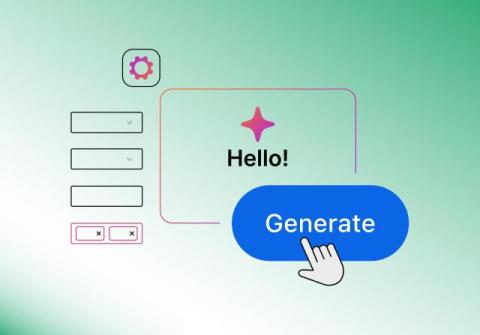
Software teams are shipping faster than ever — but testing still moves at human speed. Agile and DevOps have redefined delivery cycles, yet QA teams are often left struggling to keep up. Between evolving requirements, multiple environments, and constant regression demands, testers are expected to do more with less. One of the biggest bottlenecks? Test case design. Creating test cases manually is slow, repetitive, and prone to oversight.

Context-Driven AI Reigned Supreme at Current New Orleans

AI is redefining what it means to build data-driven businesses. It’s no longer about mining insights from data—it’s about creating intelligent systems that can understand the state of the business and act on its behalf in real time. And in this new era, context data is king. That was the recurring theme at Current New Orleans, the data streaming event that drew in thousands of attendees, in-person and online.

Diving Into Reactive Programming in Node.js

Boosting the scalability of your backend applications often means rethinking how you manage asynchronous data. That’s where reactive programming comes into play: a paradigm that treats data streams as first-class citizens, allowing your code to respond to data changes as they occur. While Node.js wasn’t built with reactive programming in mind, libraries like RxJS and Bacon.js support that approach.