We collect the latest Development, Anaytics, API & Testing news from around the globe and deliver it direct to your inbox. One email per week, no spam.
At Perforce Delphix, we have found that referential integrity is very often a deciding factor for enterprises evaluating data masking and test data management solutions. That same requirement is emerging in conversations about synthetic data, as well. Mayank Ahluwalia, Senior Product Manager at Perforce Delphix, has seen this need firsthand in his conversations with enterprise leaders.
Project leaders and QA engineers understand that cloud testing challenges are not created equal. Some issues are inconvenient but manageable, while others can jeopardize releases, security, or compliance. The real expertise lies in identifying which obstacles are truly business-critical – the ones that, if ignored, can cascade into outages, breaches, or regulatory failures.
As software vendors place more controls around data access, enterprises must decide whether their future AI capabilities will be defined by their strategy or their vendors' policies.
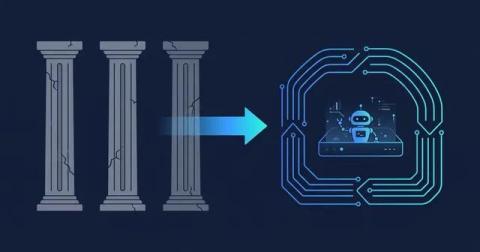
Organizations have rapidly adopted artificial intelligence, but a stark divide is emerging: those who are embedding AI into the core of their operations, and those who are treating it as a standalone tool. According to a recent Harvard Business Review Analytic Services survey, only a small share of resondents say their organization has largely integrated AI into workflows.
As AI takes on more software quality decisions, Sauce Labs becomes the first — and only — dedicated testing platform to earn independent certification for responsible AI governance.
A year ago we announced that Databox is becoming an AI-first company. At the time, that mostly meant what it meant for many companies in 2025: AI becoming a strategic priority. Teams were encouraged to experiment and adopt new tools, as it was clear that AI wasn’t a trend we could ignore. That was the easy part. What’s become clear over the last year is that there’s a significant difference between being AI-first and being AI-native.
If you have ever been asked "how do we know we tested everything?" and did not have a clean answer, a requirements traceability matrix is what you were missing. It is one of those deliverables that sounds bureaucratic until the moment you actually need it: an audit, a release sign-off, a requirement that slipped through without a single test covering it. Then it becomes the most useful document you own.
Every bug that gets fixed in your product goes through the same journey. Someone finds it, someone confirms it, someone fixes it, and someone proves the fix actually works. That journey is the bug life cycle, and teams that manage it well ship faster than teams that treat bug tracking as an afterthought.
It was 2am and I was paying for the privilege. Something was on fire in production, and I’d done the modern thing: I pointed an AI agent at it. It ingested the dashboards. It read the logs. It walked the traces. Then it handed me back a beautifully formatted paragraph that said, in effect, “latency is elevated on the checkout path.” I knew that. The page told me that.