Systems | Development | Analytics | API | Testing

The Next Question Matters More Than the First Answer

With Claude Dashboards entering beta, Anthropic is making it possible for people to ask quick, exploratory questions about their business data and get a dashboard back. You don't need to write SQL or build a visualization. I think that's a good thing. We've spent years trying to make analytics more accessible, and anything that shortens the path from question to answer is progress. I'm increasingly asked what the future of business intelligence looks like when AI can do more of the analysis for us.
Introducing the New Replicate Source for Open Lakehouse

There's a conversation happening in a lot of data teams right now. It goes something like this: the lakehouse is clearly where things are heading, Apache Iceberg is becoming the format everyone wants to land in, and the AI use cases the business is asking for need clean, open, queryable data.

Stop Picking Sides in Enterprise AI

One message coming out of Dreamforce caught my attention: context is moving to the center of the enterprise AI conversation. Good. We’ve been arguing for a while that context is what turns AI from an impressive interface into something genuinely useful for the enterprise. Salesforce’s AIforce approach is about bringing its data, workflows, business logic, semantics, permissions, security, and governance into the places people increasingly want to work, including Claude and Slack.

The Most Expensive Line in Your Data Budget Is the One You Can't See

Every data platform decision has a default setting, and the default is wait. Not because leaders think the current stack is great. Because “we’ll modernize next year” feels responsible. It sounds like discipline. It reads like you’re protecting the budget. Here’s the part that never makes it into that conversation: waiting is not the free option. It’s a spending decision, and it renews every month whether or not anyone signs off on it.

From BI to Agentic AI: Why the Dashboards You Built Are the Foundation for Agents

Two questions stall almost every agentic AI rollout: Is it secure? And what is this going to cost us? Both get harder to answer the longer you wait to ask them, and easier to answer than most teams assume. If you've already invested in a robust data analytics platform like Qlik, you're closer to a secure, governed, and cost-effective agentic AI deployment than the market's “rip and replace” narrative suggests.

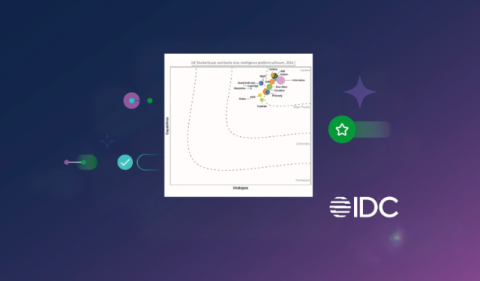
Trust, Traceability, and Choice: What We Believe Our 2026 IDC MarketScape Leader Recognition Means for Your Data

Qlik has been named a Leader in the IDC MarketScape: Worldwide Data Intelligence Platform Software 2026 Vendor Assessment. I'll say the obvious part first: we're proud of this. Independent recognition matters, and this one reflects work happening across every team at Qlik. But analyst recognition on its own doesn't help you run your data estate.

The Shift to Table-Native Foundation Models

Tabular Foundation Models (TFMs) move tabular prediction from task-specific Gradient Boosted Decision Trees (GBDTs), such as XGBoost and CatBoost, toward “table-native” models built on In-Context Learning (ICL). The training data becomes a contextual prompt, and the model produces zero-shot predictions in a single forward pass without parameter updates.

Agentic AI Just Rewrote the Data Engineer's Job Description. Here's What IT Leaders Need to Know.

Gartner predicts that 70% of today's data engineering tasks will be fully automated by 2030. I put that number to Tim Garrod, Qlik's Head of Product Management for data integration and quality, on a recent Qlik Insider session, and his answer is the one every CIO, CDO, and VP of IT should sit with: automation doesn't make the data engineer obsolete, it makes the good ones ten times more valuable. AI amplifies skilled judgment. It doesn't replace it.

The Times They Are A-Changin' - Just Not on SAP's Terms

Bob Dylan wrote those words in 1964 about a world in flux - where the old rules were being quietly rewritten, and the people who hadn't noticed yet were about to find out the hard way. He wasn't thinking about enterprise data architecture. But if you've been following SAP's moves on data access, extraction, and platform strategy over the past two years, those words might be landing a little closer to home than usual.