Accelerate your data to AI journey with new features in BigQuery ML
BigQuery ML reduces data to AI barrier by making it easy to manage the end-to-end lifecycle from exploration to operationalizing ML models using SQL.
Today, we’re hearing from telematics solutions company Geotab about how Google BigQuery enables them to democratize data across their entire organization and reduce the complexity of their data pipelines.
Our mission at Google Cloud is to help our customers fuel data driven transformations. As a step towards this, BigQuery is removing its limit as a SQL-only interface and providing new developer extensions for workloads that require programming beyond SQL. These flexible programming extensions are all offered without the limitations of running virtual servers.
Most commonly, data teams have worked with structured data. Unstructured data, which includes images, documents, and videos, will account for up to 80 percent of data by 2025. However, organizations currently use only a small percentage of this data to derive useful insights. One of main ways to extract value from unstructured data is by applying ML to the data.
If you’ve already centralized your log analysis on BigQuery as your single pane of glass for logs & events…congratulations! With the introduction of Log Analytics (Public Preview), something great is now even better. It leverages BigQuery while also reducing your costs and accelerating your time to value with respect to exporting and analyzing your Google Cloud logs in BigQuery.
Over the years, vast amounts of satellite data have been collected and ever more granular data are being collected everyday. Until recently, those data have been an untapped asset in the commercial space. This is largely because the tools required for large scale analysis of this type of data were not readily available and neither was the satellite imagery itself. Thanks to Earth Engine, a planetary-scale platform for Earth science data & analysis, that is no longer the case.
Google Earth Engine (GEE) is a groundbreaking product that has been available for research and government use for more than a decade. Google Cloud recently launched GEE to General Availability for commercial use. This blog post describes a method to utilize GEE from within BigQuery’s SQL allowing SQL speakers to get access to and value from the vast troves of data available within Earth Engine.
Migrating data to the cloud can be a daunting task. Especially moving data from warehouses and legacy environments requires a systematic approach. These migrations usually need manual effort and can be error-prone. They are complex and involve several steps such as planning, system setup, query translation, schema analysis, data movement, validation, and performance optimization.
In 2022, digital natives and traditional enterprises find themselves with a better understanding of data warehousing, protection, and governance. But machine learning and the ethical application of artificial intelligence and machine learning (AI/ML) remain open questions, promising to drive better results if only their power can be safely harnessed.
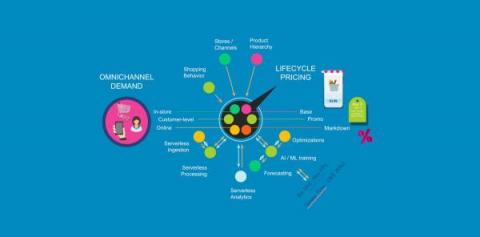
As economic conditions change, retail brands’ reliance on ever-growing customer demand puts these companies at financial and even existential risk. Top-line revenue and active customer growth do not equal profitable growth.