
Systems | Development | Analytics | API | Testing

Announcing General Availability of Kong Gateway 3.0

Kong Gateway 3.0 is an important milestone that introduces the next evolution of our cloud-native API platform. Both the enterprise and open source editions of Kong Gateway 3.0 are available now from your favorite distribution channels. With Kong Gateway 3.0, we are introducing many powerful features that deliver the following key benefits:

Kong Konnect Adds Support for Multi-Geo, Dynamic Client Registration, Custom Reporting, and More

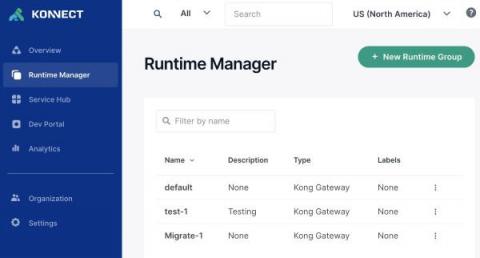
Christian Heidenreich and Sunny Xia also contributed to this post. We’re excited to announce a new release of Kong Konnect, the end-to-end SaaS API lifecycle management platform. This release introduces a number of brand new features as well as improve existing features that empower you to efficiently publish, consume, secure, analyze, and manage APIs and services across all your applications in any environment. Read on to learn more about the new capabilities in Kong Konnect.

Guide to Defense in Depth Security

Security best practices remain a top priority for enterprises, especially as high-profile hacks and cybersecurity breaches pose increased risks. According to the 2022 Morgan Stanley CIO survey, IT spending is expected to reach 4.4%, with cloud computing and security software as the leading verticals. This rapid digital transformation across sectors presents organizations with opportunities, along with some new challenges.

Kong Konnect adds Support for Federated Authentication with OpenID Connect and Personal Access Tokens

Our latest release of Kong Konnect augments the security and compliance of the offering through enhanced authentication capabilities. Through the rest of this post, we’ll walk you through each of these features and explore what’s new in this Kong Konnect release.

NGINX/OpenResty Event Handling Strategy for CPU Efficiency

Kong Gateway is built on Nginx/OpenResty because it has a unique master/worker architecture, forks out many worker processes, and can utilize every CPU core efficiently. It is the powerhouse within Kong. But one master / multi workers architecture has an annoying defect. Each worker is an isolated process, so it is hard to share something with each other, and in Kong Gateway, there’s a lot of information to communicate between workers, like rebuilding router/health check/cluster sync, etc.

Kong Mesh 1.9 and Kuma 1.8 Released with Gateway GA, new CNI and More!

We are happy to announce the release of Kong Mesh 1.9 and Kuma 1.8! This release is packed with features and improvements such as observability for builtin Gateway, a complete rewrite of the CNI and projected service account tokens support. In order to take advantage of the latest and greatest in service mesh, we strongly suggest upgrading to Kong Mesh 1.9.

What Is CI/CD?

The pace of the industry today is pressuring software developers to build, test, and release software more frequently than ever. To achieve this pace, teams have built two core processes into their workflow: Continuous Integration and Continuous Deployment. Continuous Integration and Continuous Deployment (CI/CD) is a subset of the DevOps workflow that automates application code management and its safe, predictable shipping. In this article, we’ll take a deep dive into CI/CD.

How to parse and forward API logs with Kong plugins

As more companies are undergoing digital transformation (resulting in a huge explosion of APIs and microservices), it’s of paramount importance to get all the necessary data points and feedback to provide the best experience for both users and developers. Kong Gateway is a lightweight API gateway that is built to be open and versatile. Regardless of the technology stack involved, Kong supports these monitoring or logging requirements through its extensive ecosystem of plugins.

Optimize Your API Gateway with Chaos Engineering

As engineers and architects, we automatically build resilience into platforms as far as possible. But what about the unknown failures? What about the unknown behavior of your platform? The philosopher, Socrates, once said “You don’t know what you don’t know”. What if I could tell you there is a way to turn these unknowns into knowns – a way to understand how your platform will behave to specific failure events…