
Systems | Development | Analytics | API | Testing

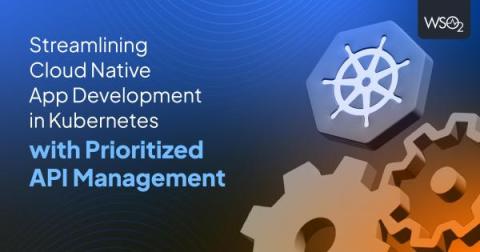
Streamlining Cloud Native App Development in Kubernetes with Prioritized API Management

For years, we've witnessed how applications have shifted to the cloud, driven by cost savings, flexibility, on-demand access, scalability, and faster deployment times. During that time, new architectural best practices for building cloud native applications have emerged. (For more insights, refer to this whitepaper.) Yet despite these advances, it remains difficult to build cloud native applications that fully take advantage of Kubernetes, the platform of choice for most cloud deployments.

The Illusion of Control: Why In-House Platforms Can Undermine Your Business Strategy

In the rapidly evolving tech landscape, the promise of control reigns supreme. And, it’s why founders, CEOs, and technical decision-makers are increasingly drawn to the idea of building in-house platforms. The appeal is understandable: complete sovereignty over every layer of the tech stack, from the user interface down to the most granular data interactions. It's an intoxicating vision that promises a bespoke solution tailored precisely to a company's unique needs.

Pushing the Boundaries of OAuth and OIDC Security - Push Authorization Request (PAR)

In the world of API security, OAuth 2.0 plays a crucial role in authorization. OpenID Connect (OIDC) works seamlessly with OAuth 2.0, providing an identity layer that ensures standardized authentication and user information for applications. Among various grant types, the Authorization Code stands out as a recommended standard. It's known for its advanced security features, support for refresh tokens, reduced exposure of credentials, and adaptability for both server-side and front-end applications.
Featured Post

DBA, The Key to Improving Security and CX Without Compromise

Today's consumers demand Amazon-like digital banking experiences. However, striking the right balance between customer experience and security remains an arduous challenge for banks. A consequence of user-driven authentication mechanisms is that a better customer experience usually comes at the expense of robust security measures. Contributing to the challenge is the fact that the majority of banks today rely on user-driven customer identity and access management (CIAM) systems. This requires customers to provide information each time verification is needed.

Introducing Choreo Marketplace and Connections

An API-first approach has become a key driver for innovation and agility in modern software development. Through this, businesses can accelerate development cycles, and create powerful, interconnected applications that meet the evolving needs of users and markets. As part of our commitment to empowering enterprises on their API-first journey, our team at Choreo is thrilled to announce the introduction of two new features – Choreo Marketplace and Connections.

Implementing GraphQL Subgraphs with Ballerina Swan Lake for Federated APIs

This article is based on Ballerina Swan Lake Update 7.2. Today, I want to share insights into implementing GraphQL subgraphs in Ballerina. But before we dive into coding, let's take a moment to understand GraphQL federation and the problems it solves. Ballerina Swan Lake WSO2 is an open-source and cloud-native programming language optimized for integration GraphQL Federation is a way to build a unified GraphQL API by combining multiple GraphQL services.

Legacy Code to Cloud Migration with Choreo

In today's evolving technology landscape, businesses are increasingly recognizing the potential of migrating legacy systems to the cloud. Even though they are the backbone of many organizations, legacy systems and services deployed via on-premises servers often need help to keep up with modern business requirements. Cloud migration offers a transformative opportunity to enhance scalability, flexibility, and efficiency, while enabling access to a wealth of innovative services.