
Systems | Development | Analytics | API | Testing

Data Relationship Discovery: The Key to Better Data Modeling

Enterprise data storage comprises a patchwork of systems: ERP databases, CRM platforms, spreadsheets, cloud apps, and legacy files. These systems do their own jobs well individually, but collectively they create a fragmented landscape. For anyone tasked with building a migration, an integration, or even a simple report, the first challenge is not moving data. It’s understanding what exists and how it all connects.

Autonomous Data Warehouse: AI-Driven Design to Delivery

Enterprise data warehouses face a fundamental challenge. For decades, organizations treated them as static projects—build once, maintain constantly, rebuild when requirements change. As data volumes surge and business needs accelerate, this approach creates bottlenecks. Organizations need autonomous data warehouses: self-sustaining ecosystems that adapt and evolve with minimal manual intervention.

The Modern Data Warehouse: Building Autonomous Systems That Scale with Your Business

Enterprise data warehouses have reached an inflection point. For decades, organizations treated them as static projects—build once, maintain constantly, rebuild when requirements change. But as data volumes surge and business needs accelerate, this approach no longer scales. The modern enterprise needs something fundamentally different — a modern data warehouse that behaves like an autonomous ecosystem and sustains itself.

Zero Downtime Data Migration: A Real-World Healthcare Blueprint

Patient care systems don’t shut down for maintenance. Emergency rooms process admissions at 3 AM. Surgical units access medical histories mid-procedure. Yet healthcare organizations still face a persistent challenge: moving years of clinical data, billing records, and operational systems to modern platforms without interrupting any of these critical functions. This operational reality creates a specific technical problem.

Enterprise Data Consolidation: Your Comprehensive Guide

Organizations tend to accumulate data systems the way cities accumulate roads—one at a time, for specific purposes, typically with little consideration for how they’ll eventually need to work together in the future. Customer records sit in five CRMs. Financial data spans three ERP systems. Operational metrics scatter across dozens of legacy databases. The infrastructure works. Each system performs its designated function.

What is Data Warehousing? Concepts, Features, and Examples

In today’s business environment, an organization must have reliable reporting and analysis of large amounts of data. Businesses collect and integrate their data for different levels of aggregation, from customer service to partner integration to top-level executive business decisions. This is where data warehousing comes in to make reporting and analysis easier. To understand the importance of data storage, let’s first discuss the important data warehousing concepts.

What is AI Data Cleaning?

Before jumping into AI data cleaning directly, let’s first understand data cleaning itself. Data cleaning, also known as data scrubbing, is a critical data preparation step where organizations remove inconsistencies, errors, and anomalies to make datasets ready for analysis. The cleaning process may involve actions like removing null values, correcting formatting, fixing syntax errors, eliminating duplicate data, or merging related fields like City and Postal Code.

Using AI for Data Analysis - A Complete Guide

Ever noticed how you’re always getting relevant ads, whether you’re streaming on Netflix or shopping on Amazon? Or how sometimes, just thinking about something seems to make it appear on your phone? It feels like every application somehow knows what you’re thinking, serving up personalized suggestions with high precision.

Dual MCP Support in Astera AI: What it is and Why it Matters

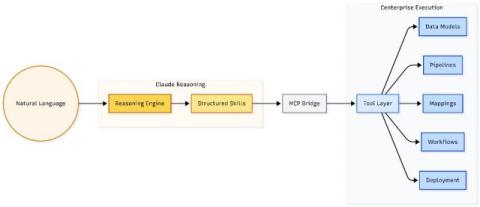
Enterprise automation didn’t start with AI agents, but they’ve had a much bigger impact than earlier automation methods, such as software scripts or bots. Modern AI agents can do a lot more than tackle repetitive tasks. They can reason through complicated workflows, choose the best course of action, and access tools to execute said action. But to do all this, AI agents require interoperability. They need to be able to connect to numerous tools, databases, services, and APIs.

Presenting Astera AI: The Agentic Data Stack For Your Enterprise Data Management

As enterprise data increases in volume, variety, and velocity, the need for a new data architecture is becoming clearer. As AI moves from generative to agentic, can enterprises also envision and adopt an agentic data architecture? It’s true that we’re already seeing AI agents implemented in functions such as customer support and marketing. But what if we could do the same for data management?