
Selenium Grid existed even before the term CI/CD was coined. It was one of the first software pieces that enabled developers and testers to get fast feedback by parallelizing their test runs. With Selenium Grid, there was no need to wait eternally for the whole test suite to run sequentially. It was one of the first enablers of the current Software Development Life Cycle.
When injecting an image with a QR Code or barcode, the image size in your preview may exceed the boundaries of the target scanner area, which would prevent your app from reading the code. In this scenario, you'd need to add padding to your uploaded image so that when it's scaled to full-screen, the QR Code will fit inside the scanning area limits and can be processed.
In the modern era of DevOps-driven development, teams are increasingly pushing smaller and smaller increments of code into production faster and faster, often leading to inadequate testing. To assure and improve the quality of software in production, many developers are now benefiting from a new test methodology that combines functional testing with error monitoring in production.
Continuous integration seems to be a difficult topic that often eludes many individuals. Some typical questions that arise are which technologies should we use and how do we actually put everything together? However, CI doesn't need to be so difficult with the combination of the right tools.
Has your organisation made the move to automation tools like Cypress, Playwright, TestCafe, Espresso and or XCUITest? Has this meant you are struggling to run your tests with confidence in your pipeline? Register today to find out how Sauce Labs can help!
Watch this video to learn how Sauce Labs and Deque axe integration allows developers and testers to easily integrate accessibility testing into their quality processes and provides increased visibility into accessibility signals for browser-based accessibility testing.
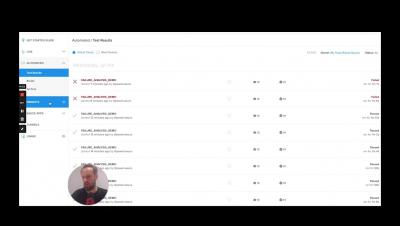
In this tutorial, you will learn to setup different test directories and files to run, configure different browsers, and run your test in either Sauce or Docker Mode using saucectl and the Sauce Labs App to collect, share, and view results from tests running at scale, in parallel.