Systems | Development | Analytics | API | Testing

A Comprehensive Guide to Workflow Automation

Workflow automation involves automating repetitive tasks and processes in a sequence using technology, reducing the need for manual intervention. It involves designing, creating, deploying, and automating business processes like data entry and customer interactions. Workflow automation uses software to replace manual and paper-based processes. Its primary goal is to ensure that the right people work on the right tasks at the right time.

Appian 24.3 Highlights

Appian brings #orchestration, #automation, and #intelligence together in a secure, performant platform for managing your most complex processes. The latest release of the Appian Platform delivers practical enterprise AI use cases with expanded compliance to help developers build faster, business users work smarter, and organizations prepare for AI regulations.

Unlock Greater Insights and Productivity using AI in Appian 24.3

In 24.2, we introduced our enterprise copilot. Enterprise copilot allows you to upload business documents and collect them in knowledge sets. From there, you can ask questions about information in these documents and receive answers quickly. For instance, an organization with a heavy regulatory burden could upload legislative and operational documents. Then, these employees could get insights from Appian AI Copilot to ensure they adhere to compliance requirements.

Low-code vs No-code vs True Low-code ETL Platforms- 360 Degree Overview by a Sales Engineer

Ramkumar Nottath, the Senior Solutions Architect at AWS, beautifully puts it. And that’s where low-code or no-code ETL platforms can help—to make the data consumable and democratize it. In this blog, I explain low-code vs. no-code from my experience.

What is Workflow Orchestration? A Complete Guide

Workflows determine how organizations conduct processes. These workflows can initially be very straightforward—just a simple series of steps that must be completed sequentially to achieve a particular outcome. However, the steps can become more complicated as business processes and requirements become more extensive. Your organization needs to keep these workflows running smoothly even as they become more complicated.

Data Migration Challenges: Strategies for a Smooth Transition

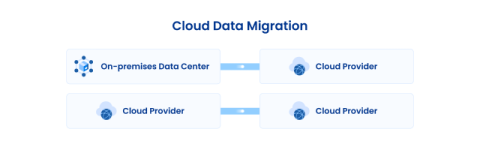
Smooth and effective data migration helps organizations move data across systems efficiently to maintain their competitive advantage. Still, Gartner reports that only 17% of initiatives involving data migration are completed within their budgets or set timelines. Understanding these data migration challenges is the first step toward overcoming them. In this blog, we’ll explore data migration and its different types, challenges, and strategies for dealing with them.

Data Mesh Defined: Principles, Architecture, and Benefits

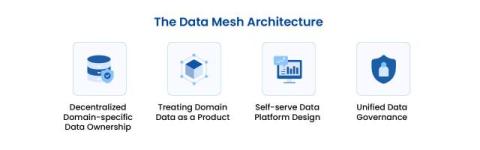
Organizations today are accumulating data more than ever. Traditional data management approaches, such as centralized data warehouses and siloed data marts, are struggling to keep pace with the ever-increasing volume, velocity, and variety of information. The complexity of modern data environments is outpacing the capabilities of these legacy systems and demands a more agile and distributed solution.

Want to Succeed in the AI Economy? Embrace AI Workflow Automation

Ready or not, AI workflow automation is poised to transform business operations from the shop floor to the C-suite in the AI economy. As organizations embrace digital-first initiatives, IT teams will be able to do much more with less. The situation is a byproduct of the generative AI boom. And yet, so many companies have hardly scratched the surface of AI automation’s full potential in their business operations.

What is Data Orchestration? Definition, Process, and Benefits

The modern data-driven approach comes with a host of benefits. A few major ones include better insights, more informed decision-making, and less reliance on guesswork. However, some undesirable scenarios can occur in the process of generating, accumulating, and analyzing data. One such scenario involves organizational data scattered across multiple storage locations. In such instances, each department’s data often ends up siloed and largely unusable by other teams.