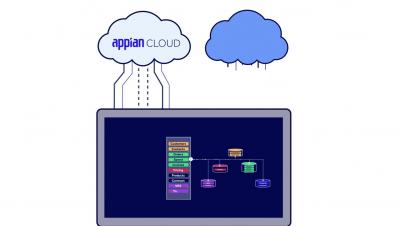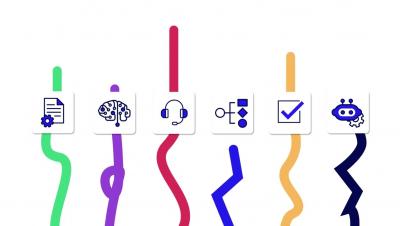
With every iteration of automation technology that hits the market, one thing is clear: We are not far from a future where the only limit to what you can automate will be within the limits of your own imagination. Appian strives to open doors to the art of the possible by putting every automation capability you need to tackle any use case into our unified low-code platform. And in Appian 22.2, the latest product release, we’re opening Windows, too.
Here’s something to know about me. I love breakfast food. With a capital “L.” And I have for my whole life. So it’s kind of surprising that I only recently added a crepe pan to my collection of kitchen tools. This crepe pan is great. It’s non-stick, but made from all-natural materials, and it’s the perfect size. I could even use it to cook bacon. Or scramble eggs. But I won't.
As government agencies and organizations look to modernize their technology stacks to keep up with changes in the workforce, aging solutions, and closing contracts, they’ll all set out with a similar process: submit an RFP, review submissions, and choose a vendor. Seems simple enough. But what government CIOs often don’t realize is that requiring proven, specific use cases may be limiting what their new (and likely expensive) technology investment can do for their organization.
New breakthroughs in drug development are leading to groundbreaking results that could change lives in 2022 and beyond. However, at the dawn of a new decade, there are major challenges facing the industry that could prevent this innovation revolution. With the rising costs and increasing complexities involved in bringing products to market, life sciences organizations are re-examining their business operations and technology adoption.
With APIs taking over, more people are asking: What can I use to create my API? Although there are many different API standards and types, we will primarily focus on REST APIs. An API can be as simple as a single endpoint with one purpose, or it can be much more complex, like the AWS APIs with 1000s of endpoints and 100s of thousands of users. What all of these APIs have in common is that they have to be developed. We like to classify the development of APIs in 3 phases: Design, Build and Host.
So far, in Parts 1 and 2 of this blog series we’ve explored how building a unified and integrated vacation plan is a lot like moving your business through the phases of successful digital transformation. In Part 1, we talked about using process mining to know where your bottlenecks and potential obstacles are, and understanding how to resolve them.
It’s a journey every organization takes eventually – overhaul legacy systems and streamline core processes to drive efficiencies. But with more complexity than ever before, even the best companies struggle, with limited process transparency, compliance mandates and performance goals preventing progress. The path to enterprise modernization is clear – efficient workflows rule the day.