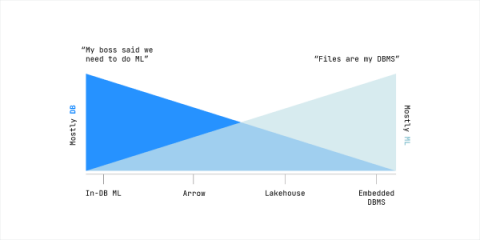
Can ML be absorbed by the DBMS?
When we think of the various people and teams making use of ML and DBMS, we can place them on a spectrum based on the composition of their work.
Machine learning (ML), more than any other workflow, has imposed the most stress on modern data architectures. Its success is often contingent on the collaboration of polyglot data teams stitching together SQL- and Python-based pipelines to execute the many steps that take place from data ingestion to ML model inference.
This is part 3 of our 3-part Hyperparameter Optimization series, if you haven’t read the previous 2 parts where we explain ClearML’s approach towards HPO, you can find them here and here. In this blog post, we will focus on applying everything we learned to a “real world” use case.
Many organizations are turning to Snowflake to store their enterprise data, as the company has expanded its ecosystem of data science and machine learning initiatives. Snowflake offers many connectors and drivers for various frameworks to get data out of their cloud warehouse. For machine learning workloads, the most attractive of these options is the Snowflake Connector for Python.