Systems | Development | Analytics | API | Testing

What Is MySQL API?

When companies have massive volumes of information to deal with, it's challenging to make sense of it all. With information spread across the organization, gathering valuable insights to drive decision-making is nearly impossible. Bringing all of this information together in a consolidated platform helps support discovery, reporting, and analysis which is critical for defining business strategies. In the era of digital disruption, agility is key.
How To Design a Dashboard in Yellowfin: Part One

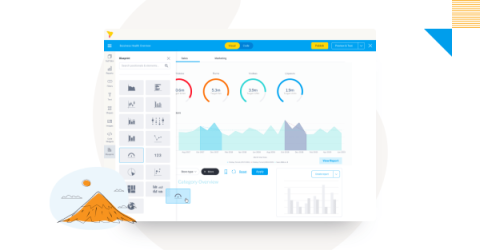
Designing a dashboard comprises many different considerations. Whether it's the business-user, data expert or business unit building the dashboard, our team aims to create a guide that will be useful for everyone who wants to (or needs to) create a dashboard, but is having some troubles figuring out how to do it. In this latest series of blogs, the Yellowfin Japan team takes the lead in introducing the process of creating a new dashboard in Yellowfin.

AS2 vs. SFTP: Key Differences & How to Choose

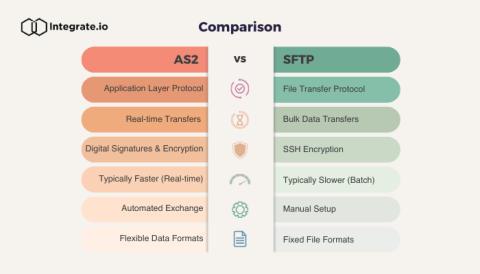
Businesses of all sizes need secure and scalable methods for sharing information, but it's not always clear what the best protocols and solutions are for each use case. Two of the most commonly used data transfer protocols are Applicability Standard 2 (AS2) and Secure File Transfer Protocol (SFTP). While AS2 is a protocol-based standard that's most often used for data transfers that require proof of receipt, SFTP is a more commonly used protocol for secure, scalable file transfer.

Six Key Predictions for Artificial Intelligence in the Enterprise

As we head into 2024, AI continues to evolve at breakneck speed. The adoption of AI in large organizations is no longer a matter of “if,” but “how fast.” Companies have realized that harnessing the power of AI is not only a competitive advantage but also a necessity for staying relevant in today’s dynamic market. In this blog post, we’ll look at AI within the enterprise and outline six key predictions for the coming year.

Branch by Abstraction | Microservices 101

The Branch by Abstraction Pattern is a method of trunk-based development. Rather than modifying the code in a separate branch, and merging the results when finished, the idea is to make modifications in the main branch. An abstraction layer is used to ""branch"" the code along an old and new path. This approach has some key advantages, especially when decomposing a monolith.

Apache Ozone - A Multi-Protocol Aware Storage System

Are you struggling to manage the ever-increasing volume and variety of data in today’s constantly evolving landscape of modern data architectures? The vast tapestry of data types spanning structured, semi-structured, and unstructured data means data professionals need to be proficient with various data formats such as ORC, Parquet, Avro, CSV, and Apache Iceberg tables, to cover the ever growing spectrum of datasets – be they images, videos, sensor data, or other type of media content.

Snowflake Announces Cyber Essentials Plus Certification

Ensuring a seamless data experience that complies with regulatory frameworks, particularly in the public sector, is crucial. Research from the U.K. government found as many as 32% of businesses and 24% of charities suffered online breaches or cyberattacks in the last 12 months. In this increasingly interconnected world, national stability depends on thoughtful data governance and safeguarding.

Snowflake And The Industry Solution Play Program.

The Snowflake Industry Solution Play Program is here and we want you to know all about it. Snowflake has developed a sales, marketing and technical program that allows our customers to harness the expertise of our Partner ecosystem and the Snowflake Data Cloud to transform how we do business today and into the future.