Systems | Development | Analytics | API | Testing

Feature spotlight: Auto Diff - New code vs Prod

When making changes to applications these days, it’s hard to understand and predict the impact of those changes before you deploy. API connections are multiplying, and with new cloud platforms such as containers/serverless, it only add to the complexity. Some people have trouble remembering whether they closed the garage door or turned off the coffee maker. Can you remember all the details of your latest API contract change? Let alone who would be impacted and needed to be notified?

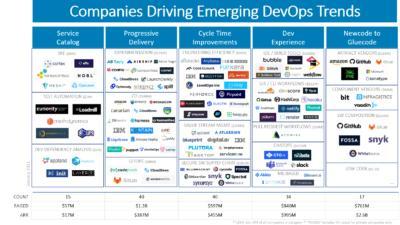
Trends in 2021 Dev-Led Landscape

Nowadays developers are in the driver’s seat regarding a lot of decisions for the tools they use. In this update from Tyler Jewell, he covers what he sees are the Top 5 trends that will take place this year. While it’s a bit of a crowded chart, he plots the companies that he sees driving these trends. If you drill into the Service Catalog trend, Jewell sees a couple of different groups working on ways to help developers deal with the deluge of Services (aka APIs).

Kubernetes is eating the world; you can digest K8's plume

Innovation in hypervisor technology in the early 2000’s from both commercial and open source projects was the genesis for the public cloud as we know it today. Virtualization and Moore’s law, together with advances in storage technology, mobile and wireless, created a data explosion that continues to accelerate through today.

Escaping GKE gVisor sandboxing using metadata

GKE is a Google Cloud service that offers a managed Kubernetes cluster, the nodes of the clusters are running on Google Cloud VM instances, the control plane and network is fully managed by GKE. GKE offers a sandboxing feature (https://cloud.google.com/kubernetes-engine/docs/concepts/sandbox-pods ), based on gVisor (https://gvisor.dev/docs/ ) it protects the host kernel from untrusted code.

Day 0 to Day 2 With Kuma, Helm and Kubernetes | FinTech Studios

During the early days of finding product-market fit, clouds were small. Often, we start with an EC2 instance here, a managed service there, then some Docker containers, microservices, and wait, Kubernetes! As clouds grow with the teams that maintain them, stable relics and legacy systems remain in production. The effort first goes towards building the future and satisfying clients — they’re paying!

How Organizations Can Leverage Kubernetes as a Universal Computing Standard

With the universal adoption of Kubernetes across cloud and data center platforms, organizations now enjoy a level of consistency across heterogenous infrastructure like never before. This opens up interesting challenges and opportunities for application deployment and IT operations. In this talk, we will discuss how organizations deploy Kubernetes across cloud, data center, branch offices and the edge. We will also cover how organizations can build a universal computing platform across multiple Kubernetes clusters running on heterogenous infrastructure. As a result, they get unprecedent application portability, deployment agility, security and control.

Leveraging Docker Containers to Manage Sauce Connect Tunnels

Sauce Connect Proxy™ is a built-in HTTP proxy server that opens a secure "tunnel" connection for testing between a Sauce Labs virtual machine or real device and a website or mobile app hosted on your local computer ("localhost") or behind a corporate firewall. It provides a means for Sauce Labs to access your application or website.

Implement a Canary Release with Kong for Kubernetes and Consul

From the Kong API Gateway perspective, using Consul as its Service Discovery infrastructure is one of the most well-known and common integration use cases. With this powerful combination more flexible and advanced routing policies can be implemented to address Canary Releases, A/B testings, Blue-Green deployments, etc. totally abstracted from the Gateway standpoint without having to deal with lookup procedures.

Taking the Leap Seamlessly Transition Legacy Applications to Kubernetes

For many organizations, moving legacy applications to modern cloud infrastructures holds great promise, such as reducing IT overhead and accelerating development times. However, in reality, these projects can be fraught with delays and service interruptions while burdening your team with transition tasks.