Systems | Development | Analytics | API | Testing

Build Failure Rate: What, Why and How to track | Bitrise Insights

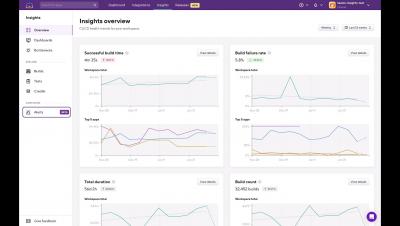
In this video, Co-founder and CTO Viktor Benei, explains why you should care about your build failure rate, and how you can monitor and debug builds that are failing frequently using Bitrise Insights. By using Bitrise Insights, mobile developers can quickly identify and fix the root cause of build failures, reducing the time and effort spent on resolving them.

A Complete Guide to Firebase Multifactor Authentication in Flutter

Authentication is a crucial part of your application. Failing to handle your authentication flow with caution can create a lot of problems for your business. In this era of rising security risks on popular websites and apps, it is very important to add multifactor authentication to your application. Multifactor authentication adds another security layer to your app, helping users to retain their accounts even if their password is compromised.

A pragmatic guide to BuildContext in Flutter

As a senior Flutter developer, a big part of my daily job consists of reviewing code, mentoring other developers, and helping them with their problems. One mistake that I noticed developers repeating on many occasions is misusing BuildContext. I analyzed why this happens and came to the conclusion that it is because of an incomplete understanding of what BuildContext is, how it works, and its scope and lifecycle.

How-to configure SageMaker with GitHub Actions

GitHub Actions is a powerful continuous integration and continuous delivery (CI/CD) platform that allows developers to automate build, test, and deployment pipelines. Workflows automatically build and test code whenever an event occurs, such as a pull request or a deployment of merged pull requests to production. Best of all, you can use it without leaving the comfort of your own repository!

Tiny Flutter: The future of Dart & Flutter on small devices?

Dart recently added experimental support for the new RISC-V CPU architecture and the first boards with these new chips are now starting to be available. One of these is the Sipeed Lichee D1, a RaspberryPi type device that is able to run Linux and Dart. At the same time, tiny but very cheap OLED screens are showing up in all sorts of devices, from soldering irons to high end music synthesizers. But what does it mean for Flutter and its mission "Beautiful apps for every screen" when the screen is 1 inch with a resolution of 128x64? Is that even possible? In this talk I'll cover how to get Dart running on one of these boards, how to use these tiny screens from Dart and what parts of Flutter can help with using screens this small.