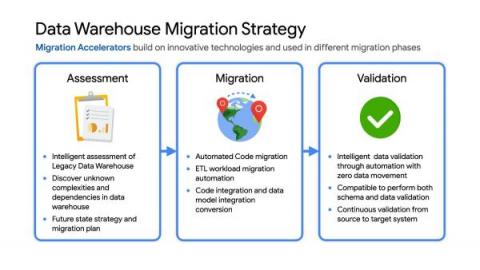
Data teams across companies have continuous challenges of consolidating data, processing it and making it useful. They deal with challenges such as a mixture of multiple ETL jobs, long ETL windows capacity-bound on-premise data warehouses and ever-increasing demands from users. They also need to make sure that the downstream requirements of ML, reporting and analytics are met with the data processing.
As a new calendar year approaches, public sector CIOs and IT leaders are preparing for another year of change in their technology stack and its role in accomplishing their mission. The last two years have brought immense change and shifting imperatives to the public sector. Perhaps one of the most impactful is the drastic acceleration of digitization initiatives.
After a year packed with one machine learning and data science event after another, it’s clear that there are a few different definitions of the term ‘MLOps’ floating around. One convention uses MLOps to mean the cycle of training an AI model: preparing the data, evaluating, and training the model. This iterative or interactive model often includes AutoML capabilities, and what happens outside the scope of the trained model is not included in this definition.
The Cloudera Enterprise Data Maturity Report is a global survey of 3,150 business and IT decision makers assessing organizations’ maturity when it comes to their current capabilities and handling of data and analytics.