
Systems | Development | Analytics | API | Testing

Supporting Legacy Web Services With Kong

Let’s admit it – web services (SOAP) are here to stay for a few more years, and maybe for a long time in some places where there is no business incentive to rebuild them. However, with a decline in new SOAP web services and most applications moving to cloud native architectures, a common query is “how can we support legacy services while moving to microservices?”

Infrastructure as Code without Infrastructure

Infrastructure as Code (IaC) is a powerful process – replacing manual, error prone and expensive operations with automated, consistent and quick provisioning of resources. In many cases, IaC is dependent on existing infrastructure, typically including a configuration management system. Chef, Puppet and SaltStack are all commonly referenced players in this market, each requiring resources to be in place and having their own difficulties in setup and maintenance.

[Online Meetup] Learning Service Mesh From Scratch: from 0 to 100

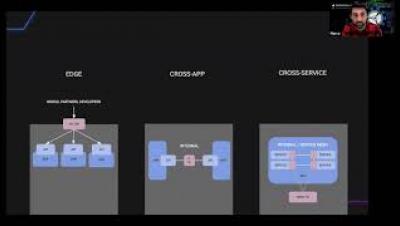
Service Mesh is the future of application connectivity. It delivers immediate value to any architecture by increasing the security, reliability and observability of our application traffic. At the same time our industry made it challenging to understand and deploy it in production: but it doesn't have to be this way.

[Online Meetup] Mocking APIs with Kong and API Fortress

In this call API Fortress talked about mocking APIs with Kong and API Fortress. You might want to mock APIs to build tests against them before the services are ready, to save money during service development, or to keep your development environments isolated. Learn how API Fortress uses Kong in their API mocking technology. Plus, see a demo.

Kong Gateway 2.0 GA!

After a full year of development since our last major open source release, we are proud to announce the next chapter of our flagship open-source API gateway — Kong Gateway 2.0 is generally available! With this release, Kong will become more operationally agnostic for large-scale deployments across on-premises and multi-cloud environments, thanks to the new Hybrid Mode. In addition, plugin development also becomes more language agnostic, thanks to the new Golang PDK support.