Systems | Development | Analytics | API | Testing

GDPR vs EU Data Act: Key Differences

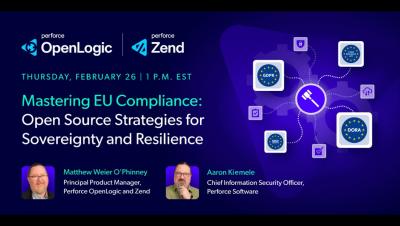
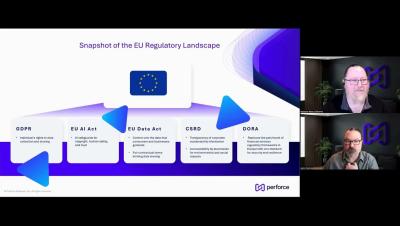
Find out the key differences between GDPR (focused on data privacy) and the EU Data Act (focused on data ownership and portability). In this clip from the OpenLogic webinar, "Navigating EU Compliance: Open Source Strategies for Digital Sovereignty and Resilience", Perforce CISO Aaron Kiemele explains that contract clauses locking data into proprietary silos are now hard to enforce, and businesses must have credible, tested plans to exit a software platform if data policy or residency requirements shift.
EU AI Act: What Businesses Need to Know

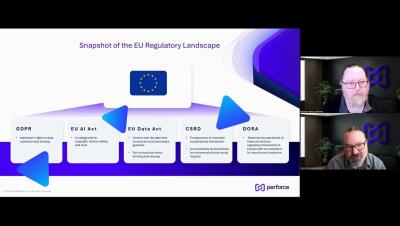
Get information about the practical compliance requirements of the EU AI Act, the first AI regulatory framework with real enforcement teeth. In this clip from OpenLogic's webinar "Navigating EU Compliance: Open Source Strategies for Digital Sovereignty and Resilience", Perforce CISO Aaron Kiemele walks through classifying AI systems by risk level, establishing human oversight and audit trails, and documenting training data provenance — while noting that these steps are straightforward but frequently overlooked by organizations.

DORA Compliance for Open Source Explained

DORA's most surprising requirement may be that financial services organizations are responsible for the security and resilience of every third-party vendor and open source dependency in their stack. If a library you depend on fails, that risk is yours to own. Learn more about DORA compliance and how to stay compliant in this clip from the OpenLogic webinar, "Navigating EU Compliance: Open Source Strategies for Digital Sovereignty and Resilience," which aired in February 2026.

EU Compliance: Open Source Strategies for Sovereignty and Resilience

In today's geopolitical environment, asking 'are we compliant?' is no longer enough. The real question is whether your business can survive if the ground shifts beneath it — through trade wars, embargoes, or regulatory changes that threaten your software supply chain.

A Secure by Default Philosophy Guiding Perforce P4

Security expectations for version control infrastructure have evolved dramatically over the years. While Perforce P4 has always empowered administrators with deep configurability, the default configurations shipped with previous versions of P4 are no longer sufficient. With the upcoming P4 2026.1 (scheduled for availability in May), we are implementing a Secure by Default posture designed to enforce best practices when protecting the source code and binary assets stored in P4.

Why Rust Embedded Development Needs Powerful Static Analysis

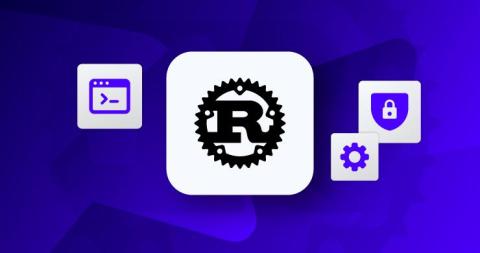
For decades, software engineers have relied heavily on C and C++ to build embedded systems. These legacy languages offer the deep control and speed required for constrained environments, but they reveal gaps in memory management and concurrency. The Rust programming language has emerged as a solution.

How Redundant Data Storage May Be Hurting Both Your Bottom Line and the Environment

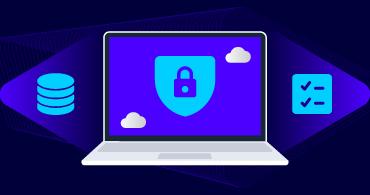
Unaccounted data copies within non-production environments can make enterprises vulnerable to cyber theft. Non-production environments — which are often less secure than production environments — are treasure troves for hackers seeking to steal customer data. How many copies of test data are currently floating around your organization’s non-production environments?

Be Ready for Your Next FTI Audit: Manage & Mask Your Sensitive Data

FTI audits are designed to ensure sensitive tax data is properly protected. But in modern enterprises, they’re about much more than passing inspections. Today, you need to manage FTI securely while still enabling fast, reliable access to data across DevOps, analytics, and increasingly, AI workflows. Treating FTI audits as part of a broader data strategy helps teams reduce risk without slowing innovation or creating bottlenecks.