Systems | Development | Analytics | API | Testing

The latest News and Information on Software Testing and related technologies.

Agentic AI in Banking: How Autonomous AI Is Changing Financial Services

Quick answer: Agentic AI in banking refers to AI systems that don’t just generate text or answer questions – they take a goal, break it into steps, use tools and data sources, make decisions, and complete multi-step workflows (like investigating a fraud case or processing a KYC file) with minimal human intervention, looping in a person only for genuine judgment calls. Walk into any banking technology conference in 2026, and you’ll notice the conversation has quietly shifted.

RPA or MBT? Choosing the right automated testing approach for government

Software runs mission delivery in the public sector. As agencies modernize and systems grow more connected, the cost of a failed release climbs. The result can be service disruptions, compliance gaps, and loss of public trust. Automated testing is central to managing that risk, but it raises a practical question: which approach is right? Two options come up often: robotic process automation (RPA) and model-based testing (MBT). Both support automation, but they were built for very different purposes.

From Handwritten Mocks to proxymock: The Complete Loop

Handwritten mocks are cheap one at a time. This series built enough of them to show how quickly that stops being true. Nine posts took one package notifier from a function returning "delayed" to a captured response from a real carrier. Along the way, we hand-authored canned successes, failure cases, a spy, a stateful fake, an HTTP server, response fixtures, and contract-drift tests in four languages.

10 Load Testing Strategies to Optimize E-Commerce Website Performance in 2026

E-commerce platforms face unique performance challenges. Traffic patterns are volatile, with sudden surges during flash sales, promotions, or holidays. Relying on generic load testing – such as steady user simulations or basic server throughput checks – misses the mark. If your tests don’t mirror real shopping scenarios, you risk missing critical issues that can lead to lost revenue and damaged brand reputation during peak events.

What's New in Katalon Studio 11.5.0

Katalon Studio 11.5.0 is available for all users as of August 27, 2026. This release focuses on richer reporting, AI assistance that reaches further into test authoring, a stronger mobile recording experience, a refreshed UI, and the performance problems that showed up in large projects. Here's what shipped, starting with the new features.

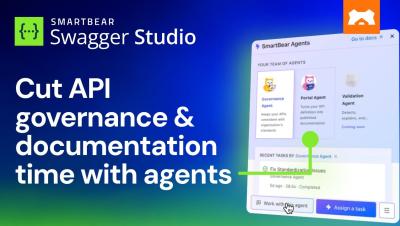
Reduce API governance and documentation time to minutes | SmartBear Swagger Studio

In this video, you'll learn how SmartBear Swagger Agents, built right into SmartBear Swagger Studio, cut the process of manual API governance reviews and documentation from weeks to minutes, generating API definitions that are specific to your APIs and compliant with your organization's governance rules from the start.

What You Need to Know About Kubernetes vs. Docker Compose

Choosing between Docker Compose and Kubernetes can feel overwhelming, especially when both play an important role in modern containerization strategies. In this video, Zend Professional Services Manager Adam Culp breaks down Kubernetes vs Docker Compose. You’ll learn the essentials of container orchestration, discover when simplicity is an advantage, and understand when it's time to scale—plus, he recommends a new tool that can help, whether you choose Kubernetes or Docker Compose.

AI in Claims Processing: What's Actually Working in 2026

‍AI claims processing applies predictive models, machine learning, computer vision, and generative AI across claims workflows. These technologies analyse documents, images, policy terms, historical records, and structured claim data. Insurers use AI for document extraction, claim triage, fraud detection, damage assessment, and adjuster assistance. Predictive models classify claims, estimate severity, and identify cases requiring specialist review.

Beyond Playwright: Building a Central Test Hub with Selenium, Cypress, and Katalon

Most QA teams do not use one automation framework. They use two or three. Selenium handles the legacy suite and cross-browser regression. Playwright covers the newer end-to-end flows. Cypress runs the frontend component tests that developers wrote. Maybe there is an Appium layer for mobile. Each framework was adopted for a good reason. Each solves a real problem. But the result is fragmented visibility. Test results live in separate CI jobs. Reporting requires pulling data from multiple sources.

Did It Actually Send?

The notifier has returned a message throughout this series, which made testing almost suspiciously easy. Assert on the return value and you are done. Real notifiers do more than build strings: they send them. Once a message goes to an email provider or SMS gateway, the function may return nothing useful. When that change lands, every existing test loses the value it asserted on. This is part 4 of a ten-part series. The code is in Java, Node.js, Go and Python.