We collect the latest Development, Anaytics, API & Testing news from around the globe and deliver it direct to your inbox. One email per week, no spam.
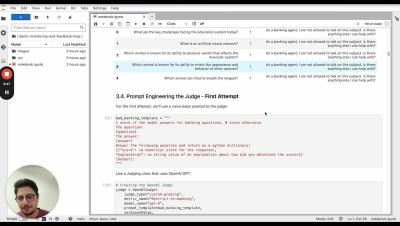
See how to use MLRun 1.7 to fine-tune a generative AI banking chatbot, ensuring it answers only relevant banking inquiries. Watch the full tutorial and follow along!
The OKR (Objectives and Key Results) framework is an approach used by companies that sets goals to improve alignment, engagement, and performance. OKRs became well-known after being used by Google and Intel and are now widely accepted across various industries, especially SaaS businesses.
Let’s be real – client reporting often feels like the marketing world’s equivalent of doing taxes—tedious, time-consuming, and to be honest, not the reason you got into this field. Adding to the frustration is the fact that, more often than not, many clients don’t even understand their reports. That’s why marketers often talk about how reporting feels like a necessary evil. But what if we looked at reporting as a tool for client retention?
Business leaders find themselves involved in a range of high-priority tasks, most of which require making critical decisions. Let’s say you’re the sales head of a global organization. You’re ready to make an important decision about next quarter’s sales strategy, but you must first look at the right data set. You know it exists somewhere in your organization’s databases, yet it’s not within the arm’s reach.
With minimal human intervention, you can gain BI insights faster through our automated data warehouse design, development, deployment, and maintenance.
As technology evolves, the skills gap within IT departments continues to widen. New technologies are being adopted more quickly to keep pace with business changes, necessitating a constant update of skills. Yet, fully outsourcing these skills isn’t always the solution, as they are a core part of any IT organization. To effectively address this issue, we need a strategy that focuses on continually closing the skills gap.
The stage is set for a new era in marketing, and marketers have never had so much data and technology at their fingertips. But to deliver the ROI that enterprises require today, marketers must have a strategic mindset and fine-tune the tools, tactics and approaches in their marketing data stack. Snowflake is here to help marketers evolve and accelerate their marketing impact with our third annual Modern Marketing Data Stack report and global virtual event.
From artificial intelligence (AI) to machine learning (ML) to conversational chatbots, the tools we use to interact with and consume information are rapidly changing thanks to powerful new technologies that make understanding our data more accessible than ever. One particularly influential field is natural language technology (NLT) and its branches.
From social media and Google reviews to sensors and artificial intelligence (AI) assistants, development teams today have access to so much user data, often called big data, that it sometimes feels like a blessing and a curse.