
Why Open Table Formats are Only Half the Solution for Modern Platforms

Are you actually building an open data platform, or are you just using open source file formats inside a new type of vendor lock-in? Many organizations assume that migrating to Apache Iceberg or Parquet automatically makes their data architecture open. However, true architectural freedom requires a strategy that spans across your entire data estate—not just the storage layer.

Connect Your Stripe Revenue Data to Any Destination with Our Integrate.io Stripe Connector

Pull transaction records, subscription lifecycle events, invoice data, and customer metadata into your warehouse, CRM, or AI pipeline, fully transformed, on schedule, with no engineering required. Stripe is the payments infrastructure behind millions of businesses. It processes charges, manages subscriptions, handles invoicing, issues refunds, and tracks disputes, all through a single API. Finance teams, revenue operations, product teams, and growth engineers rely on it daily.

Why AI Agents Need a Semantic Layer (and What That Actually Means in 2026)

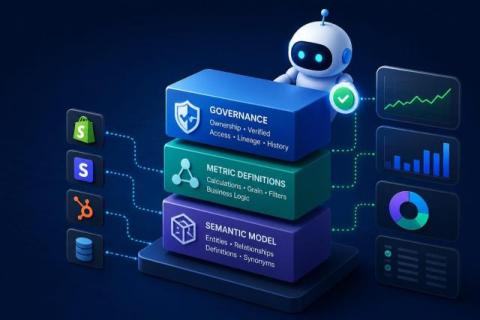
Everyone is racing to put an AI agent on top of their data. Almost nobody is asking whether the agent can be trusted to act on what it sees. That is the wrong order. And the way most teams are trying to fix it — bigger context windows, more reasoning, another eval — is also wrong. The generative model stopped being the hard part of agentic analytics months ago. Wiring an LLM to a warehouse is a weekend project.

Build a Custom OBDC Driver as a Server

With the Simba Technologies SimbaEngine SDK, you can build your own custom OBDC, OLEDB, JDBC, or ADO.NET driver to connect your data source to any application, but did you know that you can create a driver that runs on a server with the switch of a configuration setting? You can convert a SimbaEngine SDK ODBC driver into a server by switching build configurations in Visual Studio within Windows or adding BUILDSERVER=exe to your makefile in Linux, then configuring a registry or INI file.

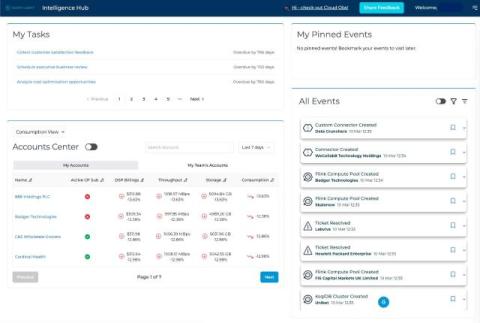
Customer Intelligence Hub: A Single Pane of Glass for Customer Insight and Action

For most go-to-market (GTM) teams, understanding what’s really happening with a customer right now is harder than it should be. Usage data lives in one system, renewals in another, support escalations somewhere else—and field notes are scattered across tools and docs. By the time someone pieces together a full picture, it’s already out of date. As we began using our own data platform internally, this fragmentation became impossible to ignore.

ThoughtSpot May Release: Your Questions Just Got Smarter Answers

Check out what’s new in ThoughtSpot’s latest release: Spotter learns from your Liveboards and conversations to deliver smarter, more context-aware answers over time. It's now easier than ever to turn complex business questions into trusted, beautifully designed Liveboards with SpotterViz Seamlessly import formulas, measures, and dimensions from Snowflake into ThoughtSpot for a single source of truth across your stack.