Optimize Your AWS Data Lake with Data Enrichment and Smart Pipelines

As an engaged member of the AWS community, we’re always on the lookout for new technologies and software tools that can help our customers succeed in their AWS data lake initiatives. During the most recent AWS Re:Invent conference in Las Vegas, we had the opportunity to engage directly with AWS partners, customers, and other technology companies operating in the AWS ecosystem.

Previewing the power of BigQuery Remote Functions for drive time optimization

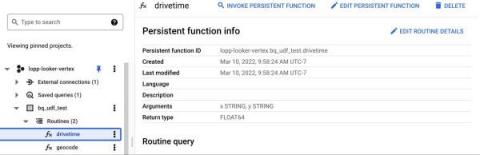
BigQuery's Remote Functions (in preview) make it possible to apply custom cloud functions to your warehouse without moving data or managing compute. This flexibility unlocks many use cases including data enrichment. In this post we demonstrate a pattern for combining BigQuery with the Google Maps API to add drive times to datasets containing origin and destination locations. This enrichment pattern is easily adapted for address geocoding or adding Google Map's place descriptions to locations.

Extending BigQuery Functions beyond SQL with Remote Functions, now in preview

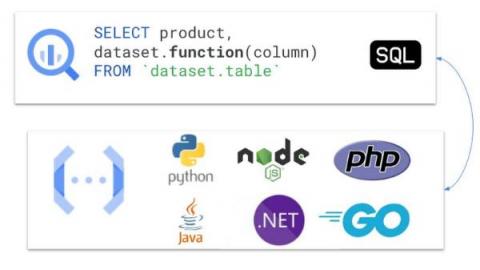
Today we are announcing the Preview of BigQuery Remote Functions. Remote Functions are user-defined functions (UDF) that let you extend BigQuery SQL with your own custom code, written and hosted in Cloud Functions, Google Cloud’s scalable pay-as-you-go functions as a service. A remote UDF accepts columns from BigQuery as input, performs actions on that input using a Cloud Function, and returns the result of those actions as a value in the query result.

Processing Unstructured Data 101

Here are five things to know about processing unstructured data: Unstructured data is big. Really big. According to an MIT Sloan School of Management study, 80-90 percent of data is unstructured information such as photos, text, audio, emails, and social media posts. This should come as no surprise to e-commerce retailers who collect and store unstructured data from invoices, online product reviews, sales presentations, and chatbot conversations with customers.

Data Integration for B2B E-Commerce, Explained

Five things to know about data integration for B2B ecommerce: Business-to-business (B2B) ecommerce companies share many of the same data integration obstacles as their business-to-consumer (B2C) counterparts—managing multiple data types, abiding by data governance guidelines, merging data with partners, etc. Still, many data integration solutions cater specifically to ecommerce enterprises in the B2C space, so integrating data remains a challenge for the B2B sector.

ThoughtSpot Expands the Modern Analytics Cloud to Help Companies Dominate the Decade of Data

New capabilities empower customers to use insights to drive actions, take advantage of any kind of visualization, and embed Live Analytics seamlessly into products and services to get the most value from the entire Modern Data Stack.