Systems | Development | Analytics | API | Testing

What Is CVE? Common Vulnerabilities and Exposures Overview

Common Vulnerability and Exposures (CVE) collects known cybersecurity vulnerabilities and exposures to help you to better safeguard your embedded software. This framework is central to managing security threats effectively. Here, we explain what is CVE, unpack the role of CVE identifiers, examine the differences of CVE vs. CWE, expand on the CVE list, and outline how identifying vulnerabilities early in software development can be achieved with the right static analysis tools.

Gradle "Build Finished Plugin": How to ensure compatibility with older Gradle versions

Our Advanced CI team is always trying to push what we have further, which often means we have to support APIs and code that are not yet fully stable. On the other hand, we are bound to support projects that are using deprecated code to a certain extent. This is particularly true for build systems that are rapidly changing to support the needs of application developers, such as Gradle.

DIY LLM Chatbot? 5 Reasons to Think Twice and Embrace DreamFactory's MCP

Large Language Models (LLMs) like ChatGPT and Claude have revolutionized how we think about business automation and conversational interfaces. So it’s no surprise that many organizations are considering building their own LLM-powered chatbot. But here’s the truth: creating a secure, scalable, and intelligent chatbot from scratch is harder than it looks.

Insurance Companies: Protect Against Scattered Spider Attacks with Data Masking

Right now, the insurance industry faces an urgent cybersecurity threat: Scattered Spider. The financially motivated hacking group has rapidly shifted its focus after preying on retail companies in the U.K. and U.S. Now, it is targeting insurance companies. The danger is clear. Insurance firms manage exactly what cybercriminals want: vast amounts of sensitive customer data.

Custom Dashboards in Kong Konnect | Part 1

From the high-stakes "war room" where you're troubleshooting an outage to the "boardroom" where you're presenting platform growth, API dashboards give you the critical visibility you need. In this demo, we introduce custom dashboards in Kong Konnect. We'll show you how to build a powerful, tailored dashboard from scratch in just a few clicks—without writing a single line of query language. See how our intuitive, user-friendly interface allows anyone on your team, from developers to non-technical leaders, to get the exact data they need.

The Roadmap for Reducing Technical Debt in 2025

Technical debt is a sneaky hang-up that organizations and teams often ignore until it becomes unmanageable. It creeps in slowly, undermines your team’s productivity, and builds up until your product is hard to maintain and scale. Software systems and development cycles are increasingly being driven and supported by AI, continuous delivery, and cloud-native environments, making it critical to adopt a clear strategy for identifying and reducing technical debt.

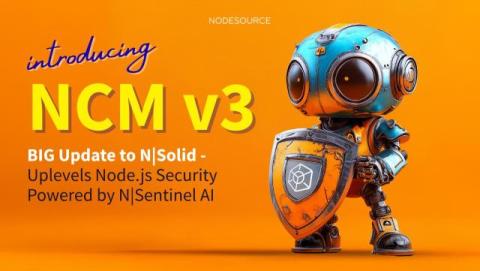
Introducing NCM v3: AI-Enhanced Security & Performance for Node.js

At NodeSource, we live and breathe Node.js and are passionate about performance and security. We understand that for developers and platform teams, managing the security and compliance of dependencies is a mission-critical task. However, the tools designed to help can sometimes become part of the problem. Today, we’re proud to introduce NodeSource Certified Modules v3 (NCM v3): a complete rearchitecture of our module scanning and observability engine.

Understanding Stack Traces in Elixir

If you have spent any time working with Elixir in a production setting — or even just building a side project — you've likely encountered a stack trace. Stack traces can appear intimidating at the outset, especially since Elixir's error messages are often more detailed than those in other languages. However, they are a powerful tool for understanding what went wrong in your code. Early in my Elixir journey, I found stack traces to be a bit overwhelming.

Top Software Development Trends to Watch in 2025

Software development isn’t what it used to be, and that’s a good thing. What was once a linear code-and-release process has evolved into a dynamic, AI‑powered, security-first ecosystem spanning cloud, edge, and compliance workflows. In 2024, the global software development market reached $403.6 billion and is expected to climb further, driven by AI, cloud-native architectures, and embedded automation.