Systems | Development | Analytics | API | Testing

Establishing a Multicloud Data Strategy for the AI Era

In my experience working with enterprise leaders, the journey to the cloud rarely follows a straight line. Many organizations set ambitious goals to move all operations to the cloud. They quickly find that certain legacy systems must remain on-premises. This reality results in a complex, hybrid multicloud environment. That means they need to adopt a new strategy for managing test data.

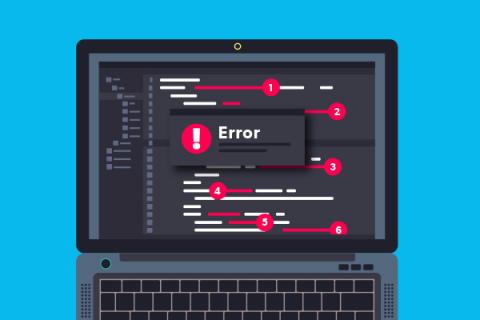
PHP Debugging: How to Find and Fix PHP Errors

PHP applications are often tricky to debug. A combination of loose typing, complex logic and a lack of runtime visibility can make it hard to catch errors before they reach our users. But if you’re using PHP, there’s no need to stress. This guide will equip you to understand why PHP applications break, return the wrong data or behave differently across environments. We’ll cover logs, runtime checks, Xdebug, IDE tools, request debugging, and production visibility.

How to Make the Most of AI Tools for Modernization

AI tools promise speed — but what does AI modernization actually mean in practice? In this video, learn how the best AI tools can accelerate application modernization without increasing risk. We cover how AI tools analyze large legacy codebases, support refactoring, and speed up modernization—when paired with expert human oversight. You’ll learn: Whether you’re exploring AI tools or already modernizing, this video shows how combining AI acceleration with experienced engineers leads to better outcomes.

Multi-Version API Management for AI Workflows | DreamFactory

Last Updated: May 2026 Asking the right questions when building an API for AI systems is critical, especially when updates risk breaking existing integrations. Here's the deal: API versioning ensures your AI workflows stay stable while introducing new features. By supporting multiple API versions, you can test updates, maintain compatibility, and avoid disruptions.

Your AI Coding Assistant Can't See Production Errors. Here's How to Fix That.

You’ve connected your AI coding assistant to your codebase, your docs, maybe even your internal wiki. It can autocomplete functions, explain unfamiliar code, and scaffold new features. But ask it what’s actually breaking in production right now, and it has nothing. No stack traces, no error trends, no idea which deploy introduced the regression your on-call just got paged for.

Building a Secure, Scalable AI Infrastructure with Kong and Akamai: A Technical Introduction

As organizations transition from experimental AI to production-grade systems, they often face a fragmented landscape of unmanaged LLM providers, complex tool integrations, and escalating security risks. This infrastructure gap leaves AI applications vulnerable to sophisticated threats like prompt injection and data exfiltration, necessitating a unified stack that secures the edge while streamlining the data plane..

From Kafka Chaos to Control: A Practical Guide to Governing Real-Time Data

Most engineering teams adopt Apache Kafka for one simple reason: it works. It scales effortlessly, it is incredibly reliable, and it powers real-time systems across almost every industry. But as your Kafka usage expands across different teams, regions, and external consumers, success creates a brand new problem. Kafka is a massive data firehose, and without the right nozzle, it quickly becomes unmanageable.

Is Oracle API Gateway Reaching the End of the Road? What to Do Next.

Last Updated: May 2026 Oracle API Gateway (OAG), the product that grew out of Oracle's 2012 acquisition of Vordel, has been on a long deprecation path. With Oracle steering customers away from on-premises OAG and toward newer cloud-based offerings, technical decision makers are facing a familiar question: stay on a product without a future, or pick a replacement that fits where the business is actually going?

Custom Warehouse Management System: Features, Architecture, Tech Stack & Development Guide (2026)

A warehouse doesn’t fail all at once. It slips. Warehouse operations have changed faster than the systems running them. That gap is showing up in subtle ways. Delays during peak hours, inventory mismatches across channels, and increasing reliance on manual interventions to keep workflows moving. Not failures, but friction. At a market level, the shift is clear.