Systems | Development | Analytics | API | Testing

Measuring Integration Dependency: Which Customer Integrations Contribute Most to Revenue?

Most real estate and PropTech product teams know they have too many integrations. What they struggle to answer is a sharper question: which ones actually matter? Surveying customers or tallying feature requests gives an incomplete picture. It conflates noise with signal and produces roadmaps full of integration work that never meaningfully moves retention, revenue, or product adoption.
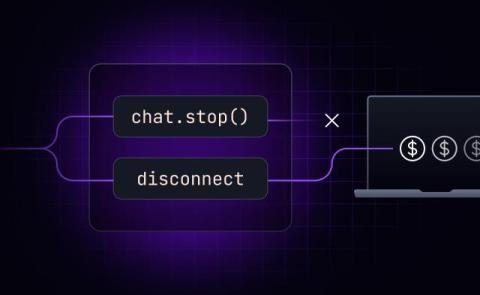
Stop vs disconnect - why canceling AI streaming is harder than it looks

You add a stop button to your AI chat app: a customer support agent, a coding assistant, a research tool the user can steer mid-task. A user clicks it mid-response. The frontend stops rendering. Then you check your backend logs and realize the underlying generation is still running, and you’re still paying for every token. This is not a bug.

Your Vercel AI SDK app is missing a session layer

If you have built an AI chat feature with the Vercel AI SDK, you have used its useChat hook. You give it your messages, and it streams the reply into your UI. You may have seen our post on the custom transport we built for the Vercel AI SDK. It swaps useChat's default transport for Ably AI Transport, adding resumable streams, cross-device and multi-user sync, conversation branching, history compaction, and stop-and-approve controls.

Debug a Node.js Memory Leak in Minutes with AI-Powered Heap Snapshot Analysis

Memory leaks are among the most frustrating production issues to investigate. At first, everything looks normal. Requests are processed successfully, users aren't reporting problems, and the application appears healthy. Then memory usage starts climbing. Garbage collection runs more frequently. Performance degrades. Eventually, the process becomes unstable or crashes altogether. Detecting a memory leak isn’t even half the battle.

Latest Linux updates for June 2026

‍An outdated build environment can slow down your team, introduce security risks, and cause hard-to-debug issues. With our upgraded Linux stacks, you get a faster, more secure, and fully maintained build environment: so your team can focus on shipping great apps, rather than managing infrastructure. Ubuntu Noble 24.04 - Bitrise 2025 Edition is now available as a stable stack, bringing Noble Numbat as the default Ubuntu version to Bitrise.

How Enterprise Teams Are Keeping Up With AI-Generated Code at Scale | Perforce 2026

When AI Starts Shipping Code: Managing the Collision Between Human and AI-Generated Code AI agents don't wait for reviews. They generate code overnight, work across the same codebase in parallel, and produce more changes than any human team can realistically process — creating a new kind of bottleneck we call the Merge Wall. In this session, Perforce engineering leaders break down what happens when human and AI-generated code collide at scale — and how leading teams are building the visibility, governance, and coordination layers required to keep up.

Moving from Probabilistic Reasoning to Deterministic Execution

Generative AI systems do not fail because models are weak. They fail because architectures are incomplete. Once organizations accept that prompts cannot guarantee reliability, a new challenge emerges: how to design systems that systematically convert successful AI behavior into repeatable, governable, and auditable workflows.

Agentic apps that go beyond chat

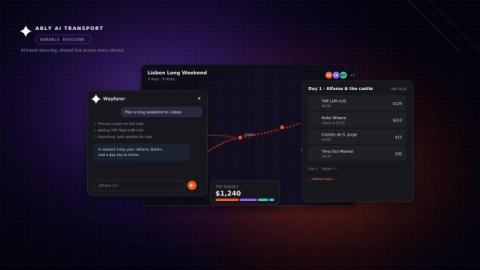
You are planning a trip with an AI assistant on your laptop. You are chatting with the agent, and as you progress it is dropping pins on a map, building a day-by-day itinerary, adding up a budget, and streaming its reasoning as it goes. The state of your interactive session is a combination of the chat history, the synthetic UI constructed by the agent during that process, and structured state, the itinerary, arising from the decisions you each make.

Introducing AI Transport v0.3.0

Last week we introduced AI Transport v0.2.0 and made one idea the centre of the design: the session is the channel. Every input, output, and lifecycle event for an AI conversation is just a message published to an Ably channel, which is what makes a session durable, multi-party, and resumable. In v0.3.0, we added first-class support for presence and LiveObjects to AI sessions, allowing you and your agent to see who's online and update shared state in real time.

Nobody trusted our internal dashboards. Now they live in code

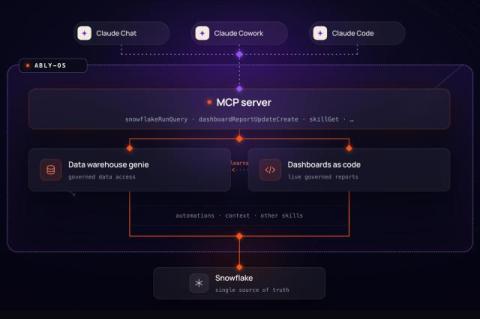
We audited our skills library a few months ago and found twelve dashboards hiding in it. Not dashboards. Skills that built dashboards. Someone needed a view of some data, asked Claude to put it together, got a long HTML page out of it, and then wrapped the whole thing in a skill so others could run it again. Twelve times over, by different people, for different questions.