

Systems | Development | Analytics | API | Testing

Find and Fix N+1 Queries in Django Using AppSignal

In this article, you'll learn about N+1 queries, how to detect them with AppSignal, and how to fix them to speed up your Django apps significantly. We'll start with the theoretical aspects and then move on to practical examples. The practical examples will mirror scenarios you might encounter in a production environment. Let's get started!


Gain clarity and control with custom git commit status reports

Ever commit code and wonder how it’s faring in the pipeline? Let's make every status update as clear as day. Every time you push new code, a series of automated CI builds and checks spring into action, each telling a part of your project's story. This is where git commit statuses come in—they transform the complex results of these processes into clear, actionable insights. Think of them as real-time signals that indicate whether your code is ready to go live or needs a little more attention.

Kotlin Flow Tutorial: Build Reactive and Scalable Applications

Efficient handling of asynchronous data streams is an important tool of modern application development. Kotlin Flows, part of the Kotlin Coroutines library, provide a flexible and elegant solution for working with such data streams. Kotlin Flows are part of Kotlin Coroutines – unlike traditional callbacks or RxJava handling, which can be clunkier and may not directly integrate with your existing code structure easily.

What Is Platform Engineering?

Platform engineering is a software development approach that combines DevOps principles to elevate the developer experience. It focuses on designing and constructing toolchains and workflows that promote self-service capabilities for software engineering teams. By addressing security, compliance, and operational efficiency, platform engineering enables organizations to build robust internal systems tailored to the needs of both developers and operations teams.

AI-Driven Phishing Detection in Choreo

One of the major challenges in detecting phishing is the limitations at the Internet Service Provider (ISP) level. Traditional tools often lack the visibility and ability to recognize phishing sites in real time, as they mostly rely on network-level information. Phishing schemes frequently use complex, changing tactics, like rotating domains or imitating legitimate sites, which can go unnoticed without a detailed analysis of the site’s content.

Mastering the sed Command in Linux: A Comprehensive Guide

The sed command in Linux is a stream editor and a versatile text-processing tool. It allows users to efficiently transform text by parsing and modifying data from files or input streams. Whether you need to replace words, remove lines, or handle patterns, sed simplifies repetitive tasks and boosts productivity. In this blog, we will explore the basics of sed command, understand its syntax, and share practical examples to show how it makes text processing easier.

Python Sleep(): What It Is and When to Use It

It would be amazing if everything in the digital world happened instantly. Unfortunately, we don’t live in an ideal world, and most of the time we need to wait for things to happen. From loading a dynamic web page to processing data, even the best implementations can have delays. Some delays happen because of the time it takes to process and transfer data. Other delays are intentional and enable applications to present visuals or data more elegantly.

Government Workflow Automation: Driving Innovation in the Public Sector

Government organizations are under pressure to deliver more efficient, transparent, and responsive services. Digital transformation is accelerating the pace of change. Public sector organizations that rely on manual processes can no longer keep up with the demands of modern governance. This is where workflow automation comes in. Automation is a powerful way to streamline operations, enhance service delivery, and improve decision-making.

Enterprise Java Beans: Definition With Examples

By 1996, developers had already made Java popular for its friendly APIs and automated Garbage Collection, and they started using it widely in back-end systems. One problem, however, was that most of these systems needed the same set of standard capabilities – such as persistence, transaction integrity, and concurrency control – which the JDK lacked at that time. That, naturally, led to many home-grown, closed implementations.

AI in FinTech Market: Everything you need to know

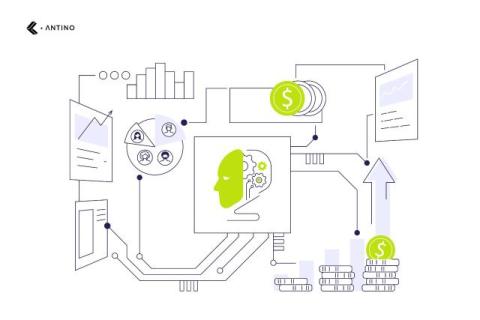
AI has been making waves in all industries, including FinTech. Not hearing this for the first time? Well, we know how much you’re already aware about AI and its applications. But do you know to what extent AI is futurizing the FinTech world? You better not just read, take a look at what statistics say… ‍In 2023, AI in FinTech sector was valued at approximately 42.83 billion USD, increasing to 44.08 billion USD by 2024.