We collect the latest Development, Anaytics, API & Testing news from around the globe and deliver it direct to your inbox. One email per week, no spam.
Explore the latest updates in Bitrise this month, including direct and bulk invitations in Workspaces, configuring SCIM with Okta, and new pricing tiers for Release Management. Discover what's new in Bitrise!
The AWS Cloud Development Kit (CDK) lets you build serverless applications with the expressive power of a programming language like TypeScript. The CDK defines cloud infrastructure in code and deploys via AWS CloudFormation. In this post, we will build a Lambda function, an AWS Gateway API, and an S3 bucket to upload CSV files. The API will take requests in JSON and seamlessly convert them to CSV format. We will use the AWS CDK in TypeScript to reliably deploy our app through AWS CloudFormation. Ready?
Microfrontends is a modern front-end architectural approach, by which web applications are segmented (or decomposed) into smaller self-contained units, allowing for easier management and scalability. You can our introduction article to Microfrontends to understand better this architecture approach. Today we’re going to provide a step-by-step guide to the process of building a real-world application using React and Module Federation.
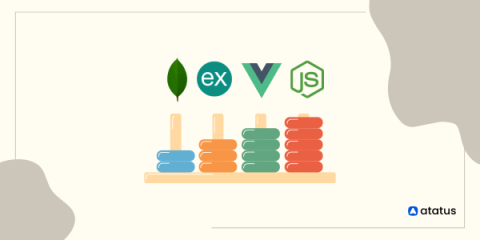
Nowadays, developers prefer a one-stop solution for web development where developers can build their entire web application on the go. Full-stack development platforms such as MEVN, MEAN, and MERN are the contemporary solutions for building an end-to-end application. Developers can create every part of the applications in the same language for every aspect - including a front-end, backend, database, API, security, web server, and more.
In many state and local government organizations, contract management is a manual process that is often cumbersome to oversee. Employees often feel overwhelmed trying to track deliverables and payments and ensure compliance. Manual contract management leads to delays and inefficiencies in procurement processes, resulting in missed opportunities to identify and acquire the right products or services at the best possible cost, which wastes taxpayer dollars.
The use of advanced robotics in the industrial automation industry is growing, helping organizations to save time and accelerate production. Extensive use of the Industrial Internet of Things (IIoT) in smart factories, advanced sensors, artificial intelligence (AI) and machine learning (ML), and connected devices and processes across distributed locations enable human-robot interaction (HRI) like never before.
While Kubernetes has become the standard platform for container orchestration, managing complex application lifecycles can still be a challenge. That's where Kubernetes Operators and Helm Charts come in. This guide dives into both of these tools to explain what they do, how they're different, and their ideal use cases. Whether you're new to Kubernetes or seeking clarity – this article is here to help!
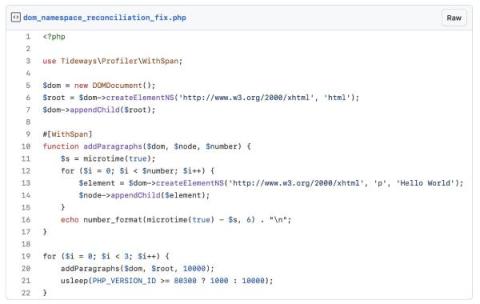
This is the story of the manufacturing of seven-league boots for a function that is responsible for processing XML/HTML data in the PHP library. Optimizations in the PHP standard library, like here in ext/dom, have the potential to speed up the performance of applications significantly by an upgrade to the current PHP version.
Stop me if you’ve heard this one before, but there’s a lot of data out there — and the amount is only growing. Estimates typically show persistent data growth roughly at a 20% annual compounded rate. Capturing, storing, analyzing, and actioning data is at the core of digital applications, and it’s critical for both the day-to-day operations and detecting trends, for reporting, forecasting, and planning purposes.