

Systems | Development | Analytics | API | Testing

Maximize Your API Revenue

The International Monetary Fund (IMF) is projecting a significant slowdown over the coming years, with global growth dropping sharply from an estimated 6.1 percent in 2021 to 3.6 percent in 2022 and 2023. Meanwhile, Reuters polls reveal that the global streak of high inflation is far from over. As such, businesses need to be doing all they can to maximize their revenue – not through increasing spend on new infrastructure, but by getting maximum business value out of their existing product.

Linux Crash Course - Beginner to Advance | Linux Commands and Architecture | Antino Labs

This Linux crash course will help you in gaining insights on Linux commands and architecture. This Linux crash course covers the concept of Linux from beginner to advanced level. This will get help you in getting a much better hold over the Linux commands. Apart from the Linux commands, we have integrated the concepts of architecture as well. We request you keep watching the video till end if you really want to gain worthy insights over Linux commands.

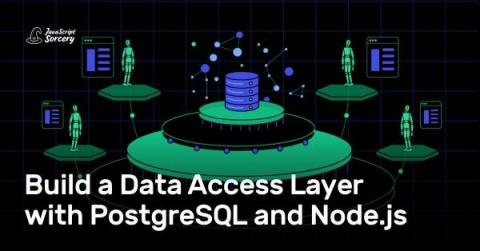
Build a Data Access Layer with PostgreSQL and Node.js

The Data Access Layer (DAL) is the most critical part of any application. This is where the code integrates with an external source of truth like a database. In this take, we'll show you how to build a DAL that talks to Postgres via Node. Then we'll go into best practices like Clean Architecture and what this means in practical terms. Ready? Let’s go! First, a quick note about the code: The code will have modern niceties like TypeScript, unit tests, and will tackle potential scalability issues.

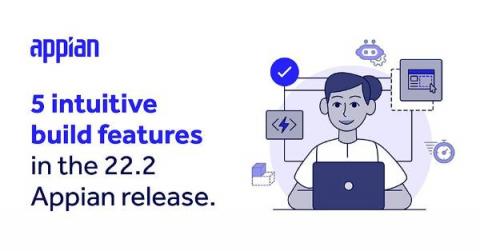
5 Intuitive Build Features in the Appian 22.2 Release

When your tools are intuitive, when they feel like a seamless extension of your capabilities, then your power to create is unlimited. In Appian 22.2, we deliver new features that continue to make development an intuitive experience, empowering you to build everything more quickly and efficiently. From guided security configurations to tracking changes across individual and team revisions, having the information you need as you build makes for a powerful app building experience.

5 Best Landing Page Builders for 2022

One-page websites with a specific goal are known as landing pages. You can use them to promote or sell a product or service, sign people up for your email list, or to target specific types of customers. Having more landing pages increases the number of leads; therefore, landing pages are a must if you want your business to flourish. However, it might be challenging, especially for new businesses.

Algebraic Data Types in Elixir

Elixir is a dynamically-typed language. Types in Elixir are checked when a program runs, not when it compiles. If they don’t match up, an exception is thrown. In statically-typed languages, types are checked during compile time. This can help us write code that is correct, understandable, and refactorable. But it also introduces a certain focus on types as the foundation for your application. One interesting concept is to use types to model your business domain.

Low-Code + Fresh Data = Better Business Decisions

Sync Records Smart Service now available in Appian 22.2 release Data is the most important part of your business. It drives your business processes, as well as your customer and employee journeys. And with data being collected and stored in various systems, it can easily become outdated and lead to inaccurate business decisions. Though 91% of businesses say data-driven decision making is important to their success, only 57% of businesses are successfully implementing this.

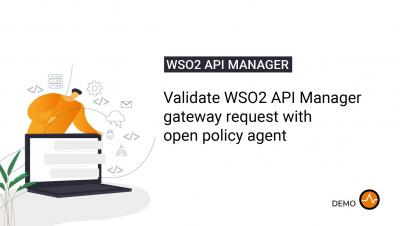
Validate WSO2 API Manager gateway request with open policy agent

Open policy agent (OPA) enables you to write security and compliance policies as code, or call any external policies using the OPA standard. WSO2 API manager uses this capability to offload policy decisions of API gateway requests to this policy engine. By decoupling the policy enforcement from evaluation, API policymakers now have the opportunity to write dynamic and reusable policies for ever-changing requirements. You can then reuse an OPA policy like any other policy in the API Manager by graphically dragging and dropping it into a policy pipeline. This video explains how it works and gives a demo.