

Offering customers a variety of ways to pay for your product allows for flexibility and ease. In general, there are two ways for customers to pay for usage: Post-paid and pre-paid. Pre-paid is sometimes also referred to as PAYG, or Pay-As-You-Go. Post-paid usage can sometimes lead customers to have billing surprises if they are not tracking their usage closely. This can cause headaches for these users and can also cause issues for the service provider.
Elastic Beanstalk makes getting started with Amazon Web Services (AWS) much easier. In this article, Farhan Hasin Chowdhury steps through how to deploy a Laravel app to Elastic Beanstalk.
WSO2 Identity Server provides many identity management workflows and password management workflows out of the box, e.g., self-registration, user invitations, password recovery, etc. However, it is not unusual to come across a situation where the workflow capabilities provided out of the box in the product, is not sufficient to fulfill your business requirement.
Photo by Micah Williams on Unsplash This article discusses a new feature which will be released for the public distribution of WSO2 Identity Server 5.12.0. This feature was developed to overcome the following scenario: You can refer to the following diagram for a deeper understanding of the above flow. This scenario can be experienced by anyone. As such, we introduced a new way to handle this scenario (as shown below) for the notification based password recovery flow.
In the previous articles, we learned how to deploy the Flutter desktop for Linux, the web app with Firebase, and S3. And in this tutorial, I will show you how to build and package a Flutter Linux Desktop app with Bitrise.
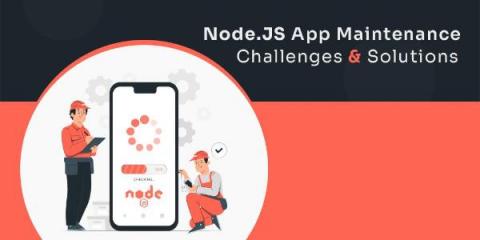
Web applications are necessary to enhance the visibility of a business organization and help them achieve better ROI. Therefore, firms need to choose the right web development language to get the best results. Node.js has emerged as a leading programming language for developing web applications. But in hindsight, there are some complications that developers face with Node.js app maintenance.
At times, Node.js can feel like a black box. Shifting to an asynchronous programming model changes how developers are required to handle and interpret existing data. There are many solutions out there to help the users gain more visibility; however, it has been proved that all those solutions out there to capture such critical information come with a high toll on the performance of every application implementing them.