Systems | Development | Analytics | API | Testing

5 Tips to Design Ruby on Rails Transactions the Right Way

Data integrity problems are among the most common database issues Rails developers face. Besides allowing for proper validation, correctly designed transaction blocks ensure that your data isn't partially created or updated. However, transactions can also harm your application — or even take down your whole database — when not properly designed. This article offers a set of good practices for working with transactions.


Understanding Node.js Module Exports

The capacity to reuse and build upon the foundations of other people is one of the most powerful aspects of software development. The code-sharing has helped in the rapid advancement of software. This process of code sharing in Node.js is eased via module.exports or exports, which can be used both within individual projects and in external npm dependencies. Modules are code structure building elements that help Node.js developers better structure, reuse, and distribute code.

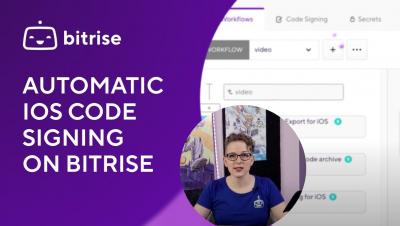
Automatic iOS code signing options Bitrise Feature Updates

We simplified iOS code signing on Bitrise. Now there are two ways to automate code signing on Bitrise: using Xcode Build/Archive Steps (with iOS Auto Provision steps merged into them) or the 'Manage iOS Code Signing' Step instead. In both cases, we've reduced the number of things that could go wrong. Presented by Anna Bátki, Product Marketer at Bitrise. Thank you for watching! Please feel free to comment your thoughts below.

How to Integrate Moesif and Stripe to Easily Monetize Your APIs

Once you decide to monetize your app or APIs, the journey begins to find a simple and robust solution for billing. At Moesif, we know that a billing solution is actually really tough to implement. Getting your product from “0-to-monetization” is not always a straightforward path, even if it should be. Our no-code approach to billing is a simple and elegant way to very rapidly gain the capability to bill customers for usage.

Building a Next-Gen API Platform with the All-New Choreo Connect Microgateway, WSO2 Webinar

Microservices have become the de facto standard in modern application architecture. Modern application workloads are spread among several groups of microservices, cloud services, and legacy services. Kubernetes has become the industry standard for deploying microservices, with service meshes allowing developers to isolate and control service-to-service connections. Choreo Connect is an API microgateway that is cloud-native, open-source, and developer-focused. It offers first-rate Kubernetes support while supporting a variety of API management quality of services (QoS), such as message security rate-limiting, observability, and message mediation.

Why Cloud Software Development is So Important for Your Business

If you’ve had your tent pitched in the tech space for a while, you should know that everyone talks about “the cloud.” About a decade ago, it was sort of an IT buzzword. Now? Cloud software development is the next step in the business software evolution, and the numbers do not lie. Eighty-nine percent of enterprises already use a multi-cloud strategy, with 80 percent leveraging a hybrid approach, combining private and public clouds. But here’s where it gets interesting.

Phoenix LiveView Under The Hood: The Form Function Component

Thanks to HEEx and function components, LiveView provides developers with a sleek, ergonomic syntax for building and maintaining sophisticated interactive UIs. LiveView's form/1 function component is a great example of this, making it easier than ever before to render complex forms within LiveView. However, the form/1 function component can feel a little mysterious to anyone unfamiliar with LiveView's function components.