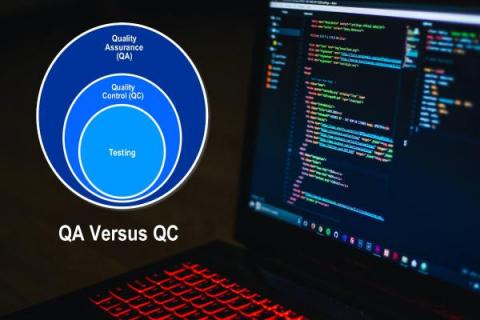
Quality Assurance (QA) is a typical process for ensuring that the end product of any Software Development Lifecycle (SDLC) corresponds to the overall and scope-agreed-upon objectives. Historically, quality assurance (QA) testing has been introduced rather late in the software development cycle. In a Waterfall process, for example, the software is created and then sent along to the QA team, which provides input and then sends the program back to the development team to be fixed.
Will your software perform well during peak hours? Can it handle the load during sales periods? Is your infrastructure valid if you double your sales by the end of the year? These are just some of the questions that scalability testing can help you answer. Scalability testing evaluates the activity level of your application by upscaling and downscaling the number of users.
This blog post is a summary of my talk at the iOS Singapore Conference 2022 about scaling up iOS automated tests using fastlane and other tools.
From the modern application platform perspective, products should allow architects and DevOps teams to support dynamic topologies. That means a multi-platform capability is required but not sufficient. In fact, for several reasons, companies are looking for hybrid deployments to run their applications on several platforms simultaneously. Moreover, the topology should support and adjust for new and continuous architecture changes.
A while back we predicted that.NET Core would be the next big thing, offering developers many options in application development. Indeed, there is huge demand for developers skilled in this technology. But how does it differ from the.NET Framework, and what do you need to know to use them both effectively? Today, we’ll contrast.NET Core vs.
The iPaaS market is clearly growing now at a faster pace than ever anticipated. This is not only due to the pandemic forcing companies to accelerate the digital transformation, but also in general due to the rise of SaaS. The replacement of older, server-bound software solutions with more modular, user-friendly and flexible SaaS solutions means customers need to connect these disparate cloud systems somehow if they want their business to become truly data driven.