Systems | Development | Analytics | API | Testing

Katalon Product Roundup June 2026

June's releases share one thread: less setup between what you already know and a working test. Production Insights can turn a single real user session into a test case without a full Journey Map first. Katalon AI Assistant now reads the docs and boards your team already works in, shows its reasoning as it goes, and reaches apps your CI never could. Test management got safer to run at scale, with version history, ALM sync, and encrypted secrets. Here's everything that shipped.

Beyond Migration: Elevating the SI Role to Strategic AI Architect

For years, the mandate for System Integrators (SIs) was clear: lead the "cloud-first" migration. The promise was lower costs, greater agility, and seamless innovation. But for many enterprise customers, that promise remains unfulfilled. Instead of agility, organizations have inherited a complex, fragmented data estate. Data is siloed across on-premises legacy systems and multiple public clouds, creating governance headaches and inflating infrastructure costs.

Your step-by-step guide to Engineering interviews at Bitrise

If you are thinking about applying for an Engineering role at Bitrise (which we highly encourage), you probably want to know what happens after you hit that "apply" button. This post walks you through every step. It helps you decide whether we're the right place for you, gives you clarity before the interviews, and sets you up for success even before you apply.

How to Ingest and Reconstruct Multiple Unrelated CSV Exports or a PostgreSQL Dump from an Acquired Legacy System

You ingest and reconstruct multiple unrelated CSV exports or a PostgreSQL dump from an acquired legacy system by first mapping the dump's underlying schema and relationships, then building a staged pipeline that loads raw files or tables as-is, reconstructs relationships through keys, and only then applies business logic to produce clean, usable records.

Natural Language to Data Pipeline: How to Build Migrations Without Writing Code

You build a data pipeline from natural language by describing the source, destination, and required transformations in plain English to a platform with a prompt-to-pipeline feature, which then generates a draft pipeline with inferred field mappings, transformations, and a schedule for you to review and adjust. This guide is for operations teams, data analysts, and junior team members who understand the desired outcome of a migration but don't write SQL or Python.

How to Monitor Your MCP Server (Step-by-Step Guide)

MCP servers have quietly become production infrastructure. If you have shipped a Model Context Protocol server so that Claude, an agent, or a connector can call your tools, that endpoint is now on the critical path. When it goes down, or starts returning errors, your users feel it the same way they would feel any API outage. The difference is that most teams are not watching it yet.

Securing Non-Deterministic Systems: Comprehensive AI Security Testing for Enterprises

Enterprise QA teams are discovering that deploying machine learning models breaks their existing validation pipelines. Legacy testing environments rely on a simple truth: fixed inputs must produce predictable outputs. Because intelligent architectures operate on probabilistic distributions, deterministic testing alone can no longer guarantee reliability. When conducting a code review or architectural risk assessment, treating an active model as a standard black-box API leaves critical flaws unaddressed.

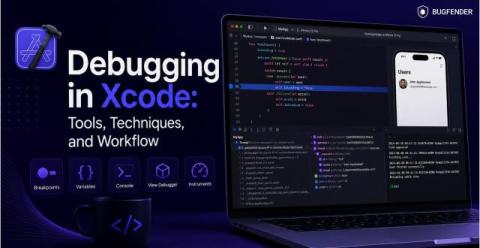
Debugging in Xcode: Tools, Techniques, and Workflow

Xcode debugging tools integrate smoothly with the rest of the Xcode ecosystem and offer myriad benefits to developers, including powerful breakpoints and source-level visibility. This guide will help you unlock them. We’ll equip you with the knowledge to: If you’ve come for a specific piece of knowledge, here’s the full list of contents so you can go straight there.

How to Run a Monthly Financial Health Check for a Services Firm With QuickBooks

Services firms run on a specific financial rhythm that traditional business dashboards were not built for. Revenue is lumpy because invoices land when clients pay them, not when work is delivered. Cash flow depends on which clients are current, which are 45 days overdue, and which have quietly stopped billing altogether.