Systems | Development | Analytics | API | Testing

Introducing tfgen: configure your Terraform stacks using plain Go

Until recently, we extensively used HashiCorp's CDK for Terraform. Then they announced the end of its development. We didn't want to spend months migrating to a new ecosystem, but we needed a replacement. In the Infrastructure Team at Ably, we like Go. I wondered if there was an opportunity for something simpler.

Prompt Engineering for Manual Testers: How to Get Useful Output from AI Tools

You opened the AI assistant for the first time with a fair amount of hope. You typed "write test cases for the login page." You got eight test cases back in about three seconds. Valid login. Invalid password. Empty username. Empty password. The kind of list you could have written in your sleep, missing every scenario that actually matters for your product. So you closed the tool and thought: this is fine for the basics, but it does not really get testing. AI is overhated.

How to Achieve India's DPDP Compliance for Non-Production Data & AI Workflows

Like many other countries, India has made moves to protect consumers’ data. Comparable to the European Union’s General Data Protection Regulation (GDPR), India’s Digital Personal Data Protection (DPDP) Act establishes new, higher standards for data privacy, timely breach notification, and consent management.

UFO.Hosting Review (2026): Budget $6 VPS, 10 Gbps Uplinks & Bare-Metal Servers

Building a resilient server infrastructure requires a constant balance between hardware performance, network bandwidth, and overall cost. Hosting provider UFO.Hosting has drawn significant attention within the IT community due to its combination of affordable VPS plans, high-speed uplink ports reaching up to 10 Gbps, and a flexible choice of server deployment locations. The editorial team at SystemsDigest conducted a comprehensive analysis of the provider, evaluating company reliability, network connectivity, and hardware potential under heavy workloads.

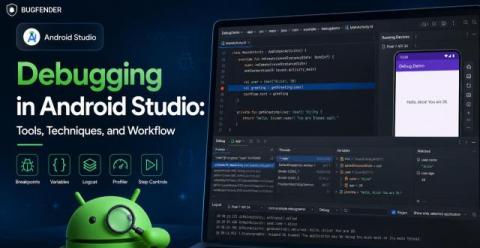
Debugging in Android Studio: Tools, Techniques, and Workflow

Debugging Android apps can feel daunting given the sheer size of the ecosystem. However the suite of Android Studio debugging tools allows us to find, fix and prevent problems across our entire user base. Wherever they are, whichever devices they’re using. This guide will give you a practical workflow to maximize the functionality of Android Studio, and empower you to debug Android apps from first breakpoint to production issues.

Starlette vs FastAPI: what FastAPI actually adds

FastAPI has become one of the most popular web frameworks among Python developers. It's so popular that it often overshadows the technologies it's built on. FastAPI is built on Starlette and Pydantic. Starlette handles the HTTP layer (routing, middleware, WebSockets, the ASGI plumbing) and Pydantic handles data validation. FastAPI is the layer on top that ties them together with type-driven parameter parsing, dependency injection, and automatic OpenAPI documentation.

What SmartBear's AWS AI Software Competency means for software teams

AI is changing how software gets built. That raises the bar for every team responsible for keeping it working. SmartBear has been developing AI capabilities across the entire quality lifecycle that help teams deliver software they trust will work at AI speed and scale. Today, SmartBear announced it has achieved AWS AI Software Competency status in the Agentic AI category through the AWS Partner program.

IoMT vs. Consumer IoT vs. Industrial IoT: Why Healthcare Needs a Different Engineering Approach

The Internet of Medical Things (IoMT) is not a subset of consumer IoT. It is not an extension of Industrial IoT either. It is a distinct engineering domain defined by clinical accuracy requirements, patient safety consequences, mandatory regulatory frameworks, and data privacy obligations. IoMT vs consumer IoT vs industrial IoT is therefore not a product categorisation exercise. It is the foundational question every connected medical device team must answer before writing a single line of firmware.