Systems | Development | Analytics | API | Testing

Benchmarking llama.cpp on Arm Neoverse-based AWS Graviton instances with ClearML

By Erez Schnaider, Technical Product Marketing Manager, ClearML In a previous blog post, we demonstrated how easy it is to leverage Arm Neoverse-based Graviton instances on AWS to run training workloads. In this post, we’ll explore how ClearML simplifies the management and deployment of LLM inference using llama.cpp on Arm-based instances and helps deliver up to 4x performance compared to x86 alternatives on AWS. (Want to run llama.cpp directly?
How to Display Charts on a Dashboard Like a Catalog

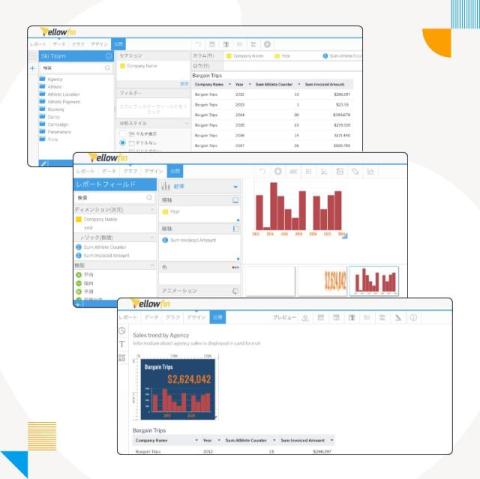
Yellowfin provide extensive customization for the design of dashboard content so you can achieve the exact look and feel required for your unique business audience and use case. Out-of-the-box, our drag-and-drop design canvas (Yellowfin Canvas) and low-code, no-code user interface enables non-developers to easily access many handy features. However, sometimes, you may want to extend Yellowfin further, or control the design and layout of your dashboard in a more specific way.

Best Automation Testing Companies in New York for Agile Businesses

Techniques that support agility have now assumed prominence in project management due to their ability to increase the probability of success. The current statistics reveal that the Agile project success rate is at 64% while the Waterfall project success rate is only at 49%. This is a prominent difference that shows how the Agile team performs successfully in fulfilling several project constraints. In terms of financial considerations, Agile makes a huge difference.

SwiftKV from Snowflake AI Research Reduces Inference Costs of Meta Llama LLMs up to 75% on Cortex AI

Large language models (LLMs) are at the heart of generative AI transformations, driving solutions across industries — from efficient customer support to simplified data analysis. Enterprises need performant, cost-effective and low-latency inference to scale their gen AI solutions. Yet, the complexity and computational demands of LLM inference present a challenge. Inference costs remain prohibitive for many workloads. That’s where SwiftKV and Snowflake Cortex AI come in.

The AI Tipping Point: What Manufacturing Leaders Need to Know for 2025

AI is proving that it’s here to stay. While 2023 brought wonder, and 2024 saw widespread experimentation, 2025 will be the year that manufacturing enterprises get serious about AI's applications. But it’s complicated: AI proofs of concept are graduating from the sandbox to production, just as some of AI’s biggest cheerleaders are turning a bit dour.

Announcing Strategic Distribution Partnerships to Scale AI

As we head into 2025, Qlik is taking a significant step forward in the evolution of our go-to-market approach by placing an even greater emphasis on our partnerships. This move is aimed at capturing the growing market opportunity in data integration, data quality, analytics and AI.

Laravel Docker containers for development and production

In recent years, both Docker and Laravel have exploded in popularity. In this step-by-step tutorial, we will dive into how to dockerize an existing Laravel app to run it locally. Then, we'll make it ready to run in a production environment, like for a web server. We will also deploy it to Google Cloud Run without getting into Kubernetes or any YAML configs, taking advantage of our Laravel Docker container. Let’s dig in!

Flutter vs React Native: Which one should you opt for your Business?

Every day, thousands of new apps make their way into the mobile app world. Remember 2018? That’s when app downloads shot up by 9%, and smartphone users spent a jaw-dropping $100 billion on apps. Crazy, right? Now, let’s talk about custom app development and cross-platform apps. By 2018, their market had already crossed $7.5 billion. But why are we going on about 2018?

Event-Driven AI: Building a Research Assistant with Kafka and Flink

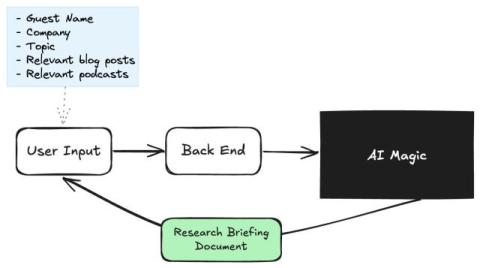
This post was originally published on Medium on Nov. 20, 2024. The rise of agentic AI has fueled excitement around agents that autonomously perform tasks, make recommendations, and execute complex workflows blending AI with traditional computing. But creating such agents in real-world, product-driven environments presents challenges that go beyond the AI itself.

How to Use Regular Expressions in Python

Regular expressions, commonly known as regex, are a tool for text processing and pattern matching. In Python, the re module offers a robust implementation of regex, allowing developers to handle complex text manipulation efficiently. In this article, we'll get to grips with regular expressions and provide practical code examples — from the basic to more advanced — so you can understand how to use regex in Python.