Systems | Development | Analytics | API | Testing

Keboola DEV/PROD Lifecycle Via Git

Keboola offers a robust virtual branching environment, enabling users to seamlessly create a shadow copy of their entire Keboola Project. This allows for development and testing of changes without affecting the production environment. These development branches contain a copy of the underlying project data, ensuring that when a pipeline is executed in the development branch, the production data remains unaffected.

What Is Python Logging? A Complete Introduction

Logging is a crucial practice that helps developers monitor, debug, and maintain their applications. Python, a versatile and widely used programming language, provides a comprehensive logging module that makes it easy to integrate logging into your applications. This post introduces Python logging, covering the basics, various logging levels, practical implementations, and more.

Strategic Role of Software Testing Companies in the EdTech Industry

According to a survey by Markets and Markets, the EdTech sector is seeing an unparalleled upswing, with the worldwide market size expected to reach an astounding $232.9 billion by 2027 at a CAGR of 13.2% over the period 2022–2027. This extraordinary expansion highlights the critical need for Edtech software testing services as well as a revolutionary change in how we study and access educational information.

Balancing risk with the need for speed

The pace of change in the world is rapidly accelerating. Technology companies must prioritize speed to market to stay ahead of this curve, but speed can sometimes come at the expense of risk. The recent CrowdStrike incident is a sobering reminder that even the largest and most capable organizations are not immune to errors that can lead to significant downstream impacts.

Mastering API Governance: Best Practices for Success

API governance sets the rules and practices to manage APIs efficiently, ensuring they remain discoverable, consistent, and secure. It’s crucial for businesses aiming to control API sprawl and enhance collaboration. This guide explores API governance, its role in effective API management, its benefits, and best practices for successful implementation.

Mastering API Modeling: Essential Concepts and Practices

An API model acts as a blueprint for building scalable and maintainable software interfaces. In this article, you’ll discover how to design, implement, and validate a robust API model, including the use of AI models. We’ll cover key concepts like API modeling, essential components, user identification, and best practices.

APIs and ERPs: A Match Made in Heaven | Dreamfactory

History is full of dynamic duos like peanut butter and jelly or Batman and Robin—but is it time to add APIs and ERPs to the mix? According to a 2019 study by Cloud Elements, APIs and ERPs are essential to modern business strategy. 55 percent of respondents believe that API integrations are “critical” to their operations. What’s more, the survey’s participants say that ERPs are one of their top three business use cases for API integrations.

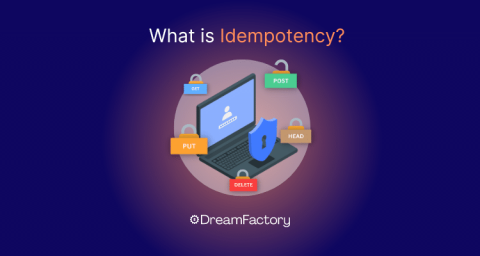
What is Idempotency?

Idempotent operations produce the same result even when the operation is repeated many times. The result of the 2nd, 3rd, and 1,000th repeat of the operation will return exactly the same result as the 1st time. In this post, we will demystify the concept of idempotency—a fundamental property that ensures consistency, predictability, and reliability in APIs and distributed systems.

What Makes Data-in-Motion Architectures a Must-Have for the Modern Enterprise

Cloudera’s data-in-motion architecture is a comprehensive set of scalable, modular, re-composable capabilities that help organizations deliver smart automation and real-time data products with maximum efficiency while remaining agile to meet changing business needs. In this blog, we will examine the “why” behind streaming data and review some high-level guidelines for how organizations should build their data-in-motion architecture of the future.