Systems | Development | Analytics | API | Testing

Webinar Recap: Run Playwright Tests in the Cloud and Report Every Result with Katalon True

Playwright test suites can remain unchanged while reporting results alongside Katalon Studio and manual testing activities in a centralized platform. This was the focus of the webinar Bring Playwright into Katalon True, delivered in two sessions on October 14, 2026. The webinar focused on how Playwright integrates into a broader testing workflow rather than comparing Playwright with Katalon. Playwright is a free, code-first framework for browser automation that many teams already use.

Intelligent Document Processing Platform: 4 Must-Have Features for 2027

An intelligent document processing (IDP) platform uses AI technologies to automatically capture, classify, extract, validate, and route data from unstructured documents such as invoices, contracts, emails, PDFs, or even hand-written scans. As organizations continue to adopt AI into their daily workstreams, IDP is on track to shift from a back-office efficiency tool to a core component of enterprise AI automation.

Appian Q3 Release Highlights: AI Speed Meets Enterprise Controls

AI is evolving faster than organizations can keep up, and often it’s the most important operations that fall the furthest behind. That’s exactly why Appian is focused on AI for complex, enterprise-grade processes—to make applying AI automation to important work easy. Over the last quarter, Appian has continued to invest in capabilities that help you deploy AI fast without sacrificing control: Over 80% of developers regularly use AI coding tools.

Optimize Load Test Script Maintenance with AI

AI-driven load test script maintenance can significantly reduce the manual updates required by traditional tools. As your application evolves – whether through new user flows, updated endpoints, or changing parameters – AI features in some platforms help automatically adjust scripts to reflect these changes. This simplifies maintenance and allows your team to focus on testing outcomes rather than constant script rewrites.

Marketing Root Cause Analysis: Using AI to Diagnose Why Performance Dropped (and What It Leaves Out)

Your dashboard already told you ROAS dropped. The expensive question is why, and answering it means correlating data across platforms, isolating variables, and testing hypotheses against the numbers. Done by hand, that is an afternoon per incident. Done by AI, it takes seconds, with one catch.

Top Automated Testing Platforms for AI-Driven Software Development

AI-driven software development has reshaped what QA teams face daily. Codebases evolve faster, release cycles are shorter, and a single missed regression can hit production within hours. Today's top automated testing platforms have moved well past scripted checks, they now use machine learning to write, maintain, and adapt tests on their own. The five platforms below represent where the market stands in 2026, chosen for their AI architecture, enterprise track record, and real documented results.

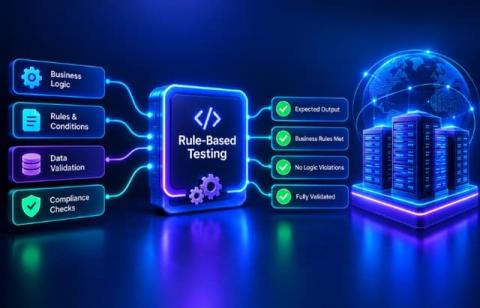
Why Deterministic Rule-Based Testing Unlocks Enterprise Logic Scale

Modern enterprise applications process millions of calculations daily, checking vast combinations of transactional parameters, localized regulations, and internal security architectures. Relying on basic exploratory methods or loosely defined scripts creates severe validation gaps, making structured QA testing and rule-based testing essential for preventing system failure.

Data-Driven Testing in Katalon Studio: From Requirement to Bound Test Suite in One Prompt

Data-driven testing turns one test case into many: one script, one data file, one iteration per row. Katalon AI Assistant already writes your test cases and test data in minutes. Binding them together, though, was still a manual job that could take far longer. In Katalon Studio 11.6, the assistant does that part too.

Accounts Payable Metrics: 10 KPIs to Track, with Formulas and Benchmarks

Accounts payable metrics are the numbers a finance team uses to judge how well AP is working. They show what each invoice costs to process, how fast and accurately it moves to payment, and how well payments are timed. The most useful accounts payable performance metrics fall into five families: cost, productivity, speed, quality, and cash. These metrics apply whether invoices are keyed by hand or captured with accounts payable automation. No single number tells you whether AP is healthy.