
Systems | Development | Analytics | API | Testing

Exposing Kafka to the Internet: Solving External Access

Your Kafka Doesn't Have to Live Behind a Wall There's a problem that almost every platform team running Kafka at scale eventually hits, and it usually starts with a reasonable ask: "Can you give our partners access to this event stream?" What follows is rarely simple. You start scoping VPC peering. Then someone asks about firewall rules. Then you realize each new external consumer is going to need its own network arrangement.

From APIs to Agentic Integration: Introducing Kong Context Mesh

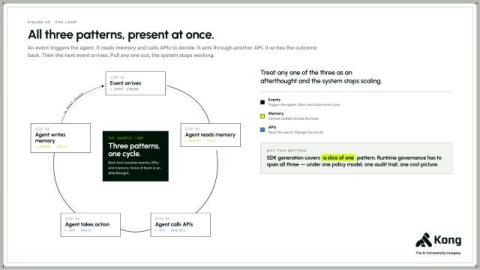
The promise of agentic AI is clear: autonomous systems that can reason, plan, and act on your behalf. But there's a fundamental problem standing between that vision and enterprise reality: agents need context to make decisions, and that context lives scattered across your organization. Context is any data — or any abstraction that enables access to data — that an agent needs to do its job. Customer records in your CRM. Inventory levels behind your fulfillment APIs.

Modernizing Integration & API Management with Kong and PolyAPI

APIs and integrations are the foundation of the modern enterprise. Every organization needs to securely connect systems, move data, and automate workflows, all while maintaining control, visibility, and flexibility. Increasingly, those same APIs are also being consumed by AI-powered applications and agents that must interact safely with underlying business systems.

Secure AI at Scale: Prisma AIRS and Kong AI Gateway Now Integrated

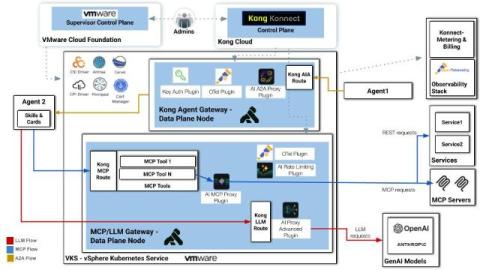
In today's digital landscape, APIs are the backbone of modern applications, and AI is the engine of innovation. As organizations increasingly rely on microservices and AI-powered features, the API gateway has become the critical control point for managing traffic. But as LLM/GenAI and MCP requests flow through these gateways, they bring a new wave of security challenges.

The Enterprise API Strategy Cookbook: 8 Ingredients for Legacy Modernization

An enterprise API strategy is no longer an optional IT exercise but a mandate for modern business survival. In the digital economy, your organization's internal connectivity, or lack thereof, determines your speed, agility, and capacity for innovation. This cookbook provides the eight essential ingredients for translating technology investment into clear business outcomes, focusing the C-Suite on value, not code.

Model Context Protocol (MCP) Security: How to Restrict Tool Access Using AI Gateways

For too long, the Model Context Protocol (MCP) has operated on a principle of open access: connect an AI agent to an MCP server, and it gets access to every single tool that server offers. While this approach is simple for initial experimentation, it quickly becomes a liability in production.

Introducing the Kong MCP Registry: Connect AI Agents with the Right Tools

In the rapidly evolving landscape of AI-driven development, the Model Context Protocol (MCP) has emerged as the critical standard for connecting AI applications to the data and tools they need. We are excited to announce the Technical Preview (TP) of Kong MCP Registry, a major milestone in our mission to provide the most comprehensive platform for modern API and AI management.

Migrate from Postman to Insomnia: Free Collaboration for Unlimited Users

With Valentine’s Day fast approaching, love is in the air. And apparently, so are breakup emails. This isn’t just about one pricing change. It’s about a pattern. Some tools promise “free forever” to get you invested, watch you build workflows, and then change the rules. They know you’ve onboarded your teams, documented your APIs, and integrated the tool into your daily work. By the time they spring the paid tier on you, switching feels painful.

Agentic AI Governance: Managing Shadow AI and Risk for Competitive Advantage

While every organization races to deploy AI agents faster, a quieter crisis is compounding in the background, and it will play a large part in determining who survives the agentic era. The numbers are stark. Too many executives see AI governance as a brake on innovation or something to figure out later, after the speed problem is solved. With agentic AI, that's backwards.