Over the past year, I've spoken to more than 40 engineering teams building production AI agents. Different companies, different frameworks, different use cases. The same conversation kept happening.
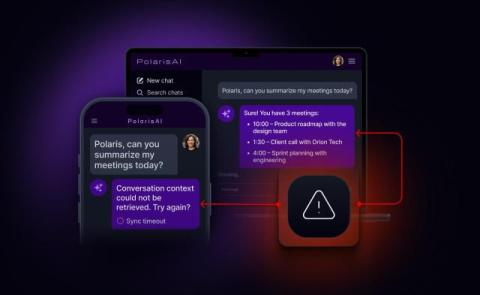
You start a research task on your laptop, the network drops during a meeting, and when you open your phone to continue, the conversation is gone – you re-prompt, get partial duplicate results, and lose 30 minutes of work. The delivery layer dropped it. That's one of the most consistent problems teams hit when building AI applications. It's particularly acute in customer support, where a session belongs to the conversation - not to any single device, connection, or participant.
Most teams building AI agents start with HTTP streaming. It's the right starting point. Every major agent framework defaults to it, it gets tokens on screen fast, and for a single-user prompt-response interaction it works well. The question is when it stops being enough - and how to recognise that before it turns into user experience problems, engineering waste, and technical debt that constrains what your product can do.
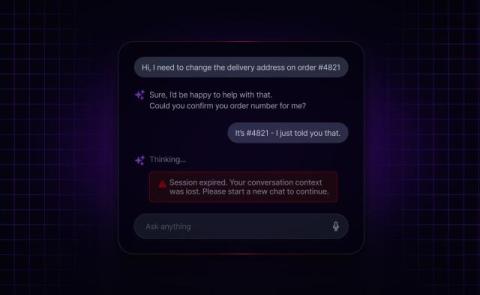
HTTP streaming – the default transport underneath every major agent framework – was never designed for sessions that survive a tab close or hand off cleanly between participants. Two failures surface consistently in production CX products because of this. Both generate support tickets about conversation state and prompt quality. Both trace to the transport layer. The scenario that illustrates them: a customer contacts support about an order that's partially shipped and partially stuck.
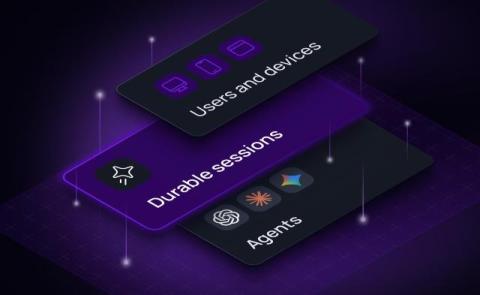
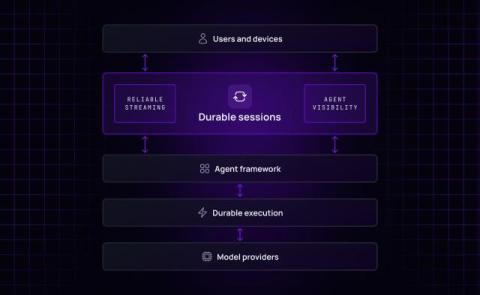
Every major layer of the AI stack now has a name. Model providers - OpenAI, Anthropic, Google - handle inference. Agent frameworks - Vercel AI SDK, LangGraph, CrewAI - handle orchestration. Durable execution platforms like Temporal make backend workflows crash-proof.
There’s no shortage of noise in AI right now. New frameworks, protocols, demos, and acronyms appear almost weekly. But when you speak directly to the teams actually shipping AI to users at scale, a different picture emerges. This is what we've learned over the last few months from speaking to CTOs, AI engineering leads, and product leaders from unicorns, public companies, and fast-growing platforms across industries where humans interact directly with AI.
Shared state is a hard problem. Not hard in the abstract, computer-science sense (the concepts are well understood). Hard in the someone has to actually build this sense, where every team that wants a live leaderboard, a shared config panel, or a poll that updates in real time ends up reinventing the same wheels: conflict resolution, reconnection handling, state recovery. Most teams do not want to spend their time building and maintaining that layer. They want to ship the feature that depends on it.
Most AI applications start the same way: wire up an LLM, stream tokens to the browser, ship. That works for simple request-response. It breaks when sessions outlast a connection, when users switch devices, or when an agent needs to hand off to a human. The cracks appear in the delivery layer, not the model. Every serious production team discovers this independently and builds their own workaround. Those workarounds don't hold once users start hitting them in production.
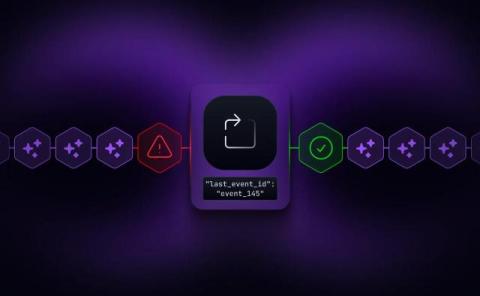
When an AI response reaches token 150 and the connection drops, most implementations have one answer: start over. The user re-prompts, you pay for the same tokens twice, and the experience breaks. Resume tokens and last-event IDs are the mechanism that prevents this. They make streams addressable – every message gets an identifier, clients track their position, and reconnections pick up from exactly where they left off. The concept is straightforward.
Building AI agents that work reliably in production requires solving problems that have nothing to do with AI. While teams focus on prompt engineering, model selection, and agent orchestration, a different class of challenges emerges at deployment. These have little to do with LLMs and everything to do with keeping agents and clients synchronized in realtime. Over the past few months, we've spoken with engineers at over 40 companies building AI assistants, copilots, and agentic workflows.