Systems | Development | Analytics | API | Testing

Why Python is Dominating High-Performance Computing

High-Performance Computing (HPC) has traditionally been an exclusive club. If you wanted to run massive simulations or crunch petabytes of data, you had to leverage the predominant languages used on supercomputing hardware—usually C, C++, or Fortran. Although fast and efficient, these languages demand strict memory management and complex syntax that require strong software development skills. Without them, development time can slow down significantly. But the landscape is shifting.

Running OpenClaw Responsibly in Production | DreamFactory

OpenClaw adoption is accelerating fast, and so are the security incidents. Within two weeks of broad adoption, over 42,000 gateway instances were found exposed to the public internet with no authentication. Nearly all of them had authentication bypasses. Eight were completely open with full shell access. Meanwhile, 341 malicious skills were confirmed on ClawHub, and infostealers like RedLine and Lumma are already targeting OpenClaw installations to harvest API keys.

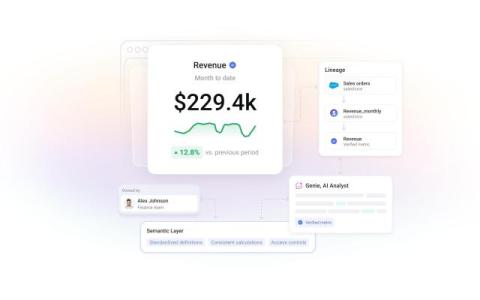
Analytics for the AI Era, Reimagined with Data Products

I spend a lot of time with customers and partners, and the pattern is consistent. Everyone wants the benefits of AI, faster decisions, more automation, better productivity. But the thing that slows them down is not the model. It’s the data underneath it. Not just any data, but trusted data to drive trustworthy business outcomes. As soon as you move from AI that explains to AI that influences workflows, ambiguity stops being an inconvenience. It becomes a liability.

How to Break Off Your First Microservice

The road from monolithic architecture to cloud-native, microservices application is rarely a straightforward engineering exercise. There's often a significant gap between understanding the theoretical benefits of microservices and successfully extracting each service from a mature, long-running codebase. Many teams exploring microservices migration struggle most with the first extraction. How do you make that initial step concrete, low-risk, and reversible?

Kotlin Annotations Explained: Guide for Android Developers

Kotlin annotations allow compilers or libraries to understand our code. These metadata tags don’t directly change code logic, but they help modify how it is interpreted, optimized, or validated. This simplifies Android development by automating repetitive tasks and ensuring consistent code behavior. It also improves code readability, reduces boilerplate code, and introduces automated checks and generation.

From green checkmarks to real confidence: How qTest and SeaLights close the modern quality gap

In modern software delivery, test results often tell an incomplete story. Test suites run, dashboards turn green, and teams feel momentum. But one important question often remains unanswered: Did we actually test what we changed? This is a gap in traditional testing that is widening as more code is generated by AI. As engineering velocity accelerates (and AI generates increasing volumes of code), the gap between test activity and true coverage is widening.

Embedded Analytics as a Revenue Generator: Turning BI Into Product Revenue

BI is Not a Cost Center The Hidden Barriers Between Embedded Analytics and Revenue Turning Embedded Analytics Into a Scalable Revenue Stream Why YellowfinBI Maps Well to Revenue-Grade Embedded Analytics Proving ROI: Revenue Stories That Survive Finance Review Conclusion: Packaging Embedded Analytics as Revenue FAQ.

Beyond RAID and Mirroring: A Next-Generation Approach to Data Resilience

Imagine being forced to buy twice the storage you'll ever use, or watch your AI workloads grind to a halt when petabyte-scale data growth from training models exhausts capacity mid-project? Many teams remember when a few well-tuned arrays and RAID groups felt like more than enough, long before AI pipelines and container sprawl started eating capacity for breakfast. And then there’s reliability.

How to Build a Unified API Layer Across MySQL, Postgres & MongoDB with DreamFactory

This guide shows how to create a single API layer that joins data across MySQL, Postgres, and MongoDB using a federated query engine with an API gateway pattern. You will implement a hands-on build, see code samples, and review performance, security, and governance steps. DreamFactory is a secure, self-hosted enterprise data access platform that provides governed API access to any data source, connecting enterprise applications and on-prem LLMs with role-based access and identity passthrough.

Automate Your Weekly Reports in 30 Minutes with n8n and Databox MCP

It’s Monday morning. Your team needs the weekly performance report. You open Google Ads and export the data. Then, GA4, export again. Then your CRM. Twenty minutes later, you’re still copying numbers into a spreadsheet, calculating week-over-week changes, and formatting everything for Slack and email. By the time you hit send, you’ve lost an hour you’ll never get back—and you’ll do it all again next week. There’s a better way.