

|
By Keploy
Your frontend is ready, but the backend endpoint it depends on ships next sprint. Your QA team wants to test a payment flow, but the third party sandbox is down again. Your CI pipeline fails twice a week because a staging database returned different data. All three problems have the same fix: an API mocking tool. API mocking tools let you simulate an API, or any dependency your service talks to, so you can build and test without waiting on the real thing. The hard part is picking one.
|
By Keploy
For years, picking a BDD testing tool was a two-option decision: Cucumber if you wrote Java, JavaScript, or Ruby, and SpecFlow if you lived in.NET. That changed when SpecFlow reached end of life in December 2024, and newer stacks like Playwright and Go now have their own BDD options. This guide compares the 10 BDD testing tools worth considering in 2026. Every tool runs the same example scenario, so you can compare the code side by side, and each entry ends with who it suits and what it costs you.

|
By Keploy
Service virtualization tools don’t all solve the same problem. One team needs to simulate a single flaky HTTP dependency in CI. Another is dealing with mainframe middleware and legacy messaging protocols that most tools don’t touch. A third is running microservices on Kubernetes and wants traffic captured automatically without writing a single stub file. The category has expanded fast.
|
By Keploy
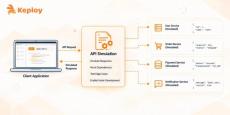
API simulation replaces real dependencies with stand-ins that respond like the actual service, keeping tests deterministic and free from rate limits, per-call fees, or unfinished upstream APIs. Simulators are built from hand-written stubs, OpenAPI specs, or recorded traffic; Keploy follows the recorded-traffic approach, capturing real HTTP, gRPC, database, and queue calls and replaying them automatically.
|
By Keploy
Bruno is an open source, offline-first API client that stores your API collections as plain text files inside your Git repo. It gives you a fast GUI for building and sending REST, GraphQL, gRPC, and WebSocket requests, plus a scripting layer for writing tests against the responses. This guide covers Bruno API testing from install to CI, so by the end you can build a request, assert on its response, and run the whole suite from the command line.
|
By Keploy
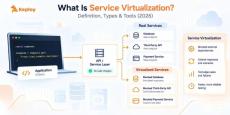
Service virtualization replaces real external dependencies (APIs, databases, queues, or third-party services) with controlled simulations that respond like the real thing. Tests run against these virtual services whether the real dependency is unavailable, expensive to call, or still being built. Keploy implements this by capturing real dependency interactions from live traffic and replaying them automatically in CI.

|
By Keploy
QA testing tools have never been more varied, and more confusing to choose between. In 2026, the category spans unit testing frameworks, API automation platforms, AI-powered self-healing test suites, and everything in between. Most teams don’t need one tool. They need a stack of three to five that cover different parts of the delivery cycle. The challenge isn’t finding tools.
|
By Keploy
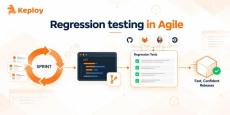
Regression testing in agile happens inside every sprint, alongside the stories being built. Targeted tests run on each pull request, the full suite runs before sprint review and every release, and hotfixes get a check of their own. The whole team shares the work while one tester curates the suite, and it stays fast when tests are chosen by what changed. Every sprint ships new code, and some of it quietly breaks features that shipped months ago.

|
By Keploy
Your team automated hundreds of test cases. Leadership wants to know if it was worth it. Most engineering teams can’t give them a number. That’s what gets automation budgets cut. Proving test automation ROI means translating testing activity into financial terms: hours saved, defects prevented before they cost 5-10x more to fix in production, and release cycles shortened enough to matter on a balance sheet. The formula exists. The benchmarks exist.

|
By Keploy
Without a test case template, test cases drift. One tester writes three-word steps. Another skips preconditions entirely and wonders six months later why nobody can reproduce the bug that shipped to production. A third writes paragraphs where steps should be. The test case template fixes this. It gives every tester on your team the same starting point: the same test case format, the same fields, the same expectations for what "documented" means. The goal isn’t bureaucracy.
|
By Keploy
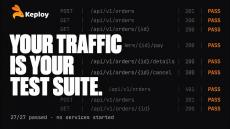
Test your whole backend without starting any of it. In this demo, Keploy records real API traffic from an order service running on Kubernetes and turns it into API tests and dependency mocks automatically: MySQL, HTTP and DNS calls included. Then it replays those tests against a digital twin of the backend, so nothing else needs to be running.
|
By Keploy
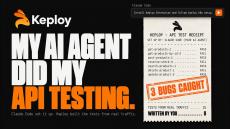
Tired of writing API tests and fake database responses by hand? In this demo, an AI coding agent (Claude Code) does it for you: it watches real requests to a Kubernetes app, turns them into tests, catches bugs, and checks every pull request automatically.
|
By Keploy
Ever wondered why your test suite keeps growing even though you're testing the same few flows over and over? 👀 In this video, we break down how Keploy automatically detects and removes duplicate tests - so your suite stays fast, lean, and actually trustworthy to review.
|
By Keploy
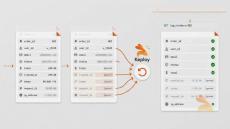
Ever had an API test fail even though nothing in your code actually changed? That's a noisy field problem and it's one of the most common causes of flaky tests. In this video, we break down: If you're tired of re-running tests just because a timestamp didn't match, this one's for you. Timestamps.

|
By Keploy
Your developers — and your AI agents — need a safe way to test against production-like behavior. Keploy records real API traffic and replays it as a digital twin sandbox, so you can catch regressions before they ship. No manual mocks. No production access. No complex test environment setup. Record → generate tests and mocks → replay in CI.

|
By Keploy
Your developers — and your AI agents — need a safe way to test against production-like behavior. Keploy records real API traffic and replays it as a digital twin sandbox, so you can catch regressions before they ship. No manual mocks. No production access. No complex test environment setup. Record → generate tests and mocks → replay in CI.

|
By Keploy
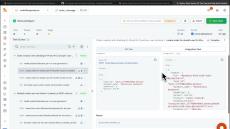
Give your developers — and your AI agents — a digital twin of your live environment. Keploy records real traffic from your live services (no production access, nothing to spin up) and replays it as a faithful twin, so you can continuously verify behavior and catch regressions before they ship. In this demo: record a live service, turn that traffic into integration tests and mocks automatically, replay everything against digital-twin sandboxes, and wire it into CI for continuous verification.
|
By Keploy
In this video, I walk through how Keploy works with Claude to make testing faster and more reliable for developers. You’ll see how to use Claude with Keploy to generate test cases for a new feature, based on your application context and API behavior. I also cover what happens when a Keploy test fails because of a breaking change, regression, or an expected product update.
|
By Keploy
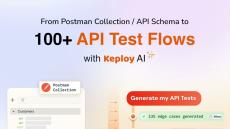
see Keploy’s agentic-AI in action! In this quick demo we paste a handful of cURL calls, the GitHub base URL, and the OpenAPI spec—then ask Keploy for 40 test flows. In under a minute it.
|
By Keploy
Learn how to migrate effortlessly from Cypress to Keploy for API testing in this step-by-step guide. Keploy is an open-source testing platform that simplifies API testing by enabling zero-code test generation and mocking, saving time and effort.
- October 2026 (4)
- September 2026 (4)
- August 2026 (4)
- July 2026 (15)
- June 2026 (6)
- May 2026 (7)
- April 2026 (8)
- March 2026 (4)
- February 2026 (10)
- January 2026 (15)
- December 2025 (22)
- November 2025 (19)
- October 2025 (15)
- September 2025 (22)
- August 2025 (39)
- July 2025 (23)
- June 2025 (21)
- May 2025 (22)
- April 2025 (19)
- March 2025 (4)
- February 2025 (3)
- January 2025 (16)
- December 2024 (20)
- November 2024 (12)
- October 2024 (10)
- September 2024 (4)
- August 2024 (7)
- July 2024 (6)
- June 2024 (9)
- May 2024 (18)
- April 2024 (17)
- March 2024 (2)
- February 2024 (9)
- January 2024 (2)
- December 2023 (2)
- November 2023 (1)
- October 2023 (1)
- September 2023 (1)
- August 2023 (2)
- July 2023 (1)
- March 2023 (3)
- February 2023 (2)
- January 2023 (2)
- March 2022 (2)
- February 2022 (1)
Keploy is a developer-centric backend testing tool. It makes backend tests with built-in-mocks, faster than unit tests, from user traffic, making it easy to use, powerful, and extensible.
- Combined Test Coverage: Merge your Keploy Tests with your fave testing libraries(JUnit, go-test, py-test, jest) to see a combined test coverage.
- EBPF Instrumentation: Keploy uses EBPF like a secret sauce to make integration code-less, language-agnostic, and oh-so-lightweight.
- CI/CD Integration: Run tests with mocks anywhere you like—locally on the CLI, in your CI pipeline, or even across a Kubernetes cluster. It's testing wherever you want it!
- Multi-Purpose Mocks: Use 'em in existing tests, as server tests, or just to impress your friends!
- Record-Replay Complex Flows: Keploy can record and replay complex, distributed API flows as mocks and stubs. It's like having a time machine for your tests—saving you tons of time!
Give your teams the tool they need to move faster.