Systems | Development | Analytics | API | Testing

How to Build a Neobank App: A Step-by-Step Engineering Guide

Digital banking is entering a different phase in 2026. Growth is no longer driven by mobile apps alone. It is being driven by embedded finance, AI powered personalization, instant payments, and API driven banking ecosystems. According to BCG, traditional banks are steadily losing ground to fintechs and digital first banking platforms as customer expectations continue to shift toward real time and seamless financial experiences. At the same time, the market is getting crowded.

First look: Agents are coming to your favorite SmartBear products

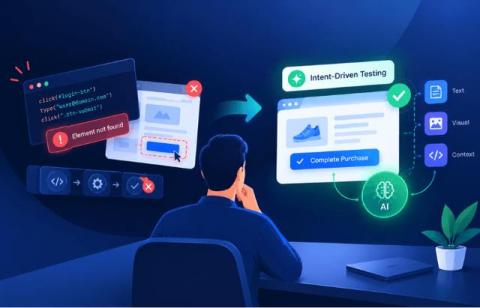
AI is accelerating how teams build and ship software, but validating quality is getting harder, not easier. More AI-generated code means more to test, more API drift to catch, and more documentation that falls behind. The work is growing faster than teams can keep up.

The death of the dashboard: why agentic AI is choking on legacy observability tools

Dashboards, sampling, and data lakes were built for human debugging. Closing the bug-to-fix loop for AI agents requires rethinking how runtime data is collected and correlated. Observability as we know it is on its way out. For over a decade, we built telemetry stacks around a single consumer: a human, staring at a dashboard, trying to make sense of a system under stress.

Ready Set Code! The Telemetry Tsunami

Welcome to Ready Set Code! The game show where data engineers face off to prove who can build faster. In today's episode, "The Telemetry Tsunami," three contestants face a massive flood of nested JSON telemetry data. Their mission: flatten the arrays, join it to customer tables, and deploy a secure automated pipeline. Who will separate themselves as a data driver vs. a data downer? Find out now! Type Less. Build More.

WWDC 2026: Under-the-radar announcements for iOS developers

WWDC 2026 delivered plenty to talk about. Apple's renewed AI push, Xcode 27 (that we shipped to customers in beta within 24 hours of the keynote!), and refreshing Liquid Glass. It also delivered a notable absence: no M5 Mac minis yet, which we covered separately. Now that the dust has settled, Bitrise’s Ben Boral went looking for the announcements that slipped past the highlight reel. If you're a mobile developer, these three are worth your time.

JavaScript console.log() Method: Complete Guide with Examples

console.log() is a foundational tool for developers learning JavaScript. It sends messages to the browser’s DevTools console, so we can see what our code is doing at runtime. This allows us to: Because it prints information directly to the console, we can observe values, program flow, and potential issues. In this post we’re going to cover the basics of console.log() syntax, the nuances of formatting and the essential DevTools add-ons that turn console.log() from a window into a dashboard.

Cloud Testing Security: Best Practices for Protecting Test Data in 2026

Cloud testing security remains a source of confusion for many IT teams. It’s not simply about protecting your test environment, nor is it interchangeable with general cloud security. In the context of load testing and performance testing, cloud testing security means safeguarding the data, assets, and processes involved in evaluating how your website or API performs under stress, all within a cloud-based environment.

Designing a Token-Efficient MCP Server: the OctoPerf Approach

In the first two articles of this series we showed what the OctoPerf MCP Server does. This one is for the builders: how we designed it, and specifically how we kept its token cost under control. Because here is the thing nobody tells you when you start writing a Model Context Protocol server: the hard part is not exposing your API to an LLM. The hard part is not exposing too much of it.